Leave Your Message

Why Choose an MCCB Arc Extinguishing Chamber?

Why Choose an MCCB Arc Extinguishing Chamber?

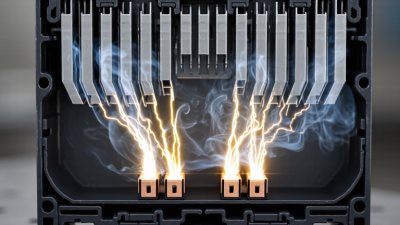
An Mccb Arc Extinguishing Chamber plays a critical role inside a molded case circuit breaker. When contacts separate during a fault, an electrical arc forms between them. The chamber helps cool, divide, and extinguish that arc before it damages nearby components. This action supports safer interruption and limits heat inside the breaker housing.

Its internal plates, insulation materials, and ventilation paths must withstand intense electrical stress. In practical testing, engineers examine contact spacing, arc duration, temperature rise, and material condition. A well-designed chamber can reduce carbon deposits and protect the breaker from repeated fault events. It may also improve interruption reliability in industrial panels, commercial buildings, and equipment control systems.

However, choosing an Mccb Arc Extinguishing Chamber should not depend on appearance alone. Short-circuit ratings, voltage levels, enclosure dimensions, and coordination requirements all matter. Poor matching can cause overheating or unreliable interruption. That risk deserves attention.

Manufacturers with documented testing procedures offer stronger technical confidence. Their records should identify applicable standards, material specifications, and production controls. Field experience also matters, because dust, moisture, vibration, and frequent switching can change performance over time. No chamber is perfect. Even a robust design needs correct installation and periodic inspection.

This article examines the chamber’s structure, working principle, material choices, and selection factors. It also considers common weaknesses that product descriptions may overlook. The goal is practical understanding, not exaggerated promises. A suitable chamber should protect the breaker, support stable operation, and fit the actual electrical environment.
Why Choose an MCCB Arc Extinguishing Chamber?

What Is an MCCB Arc Extinguishing Chamber?

Why Choose an MCCB Arc Extinguishing Chamber?

What Is an MCCB Arc Extinguishing Chamber?

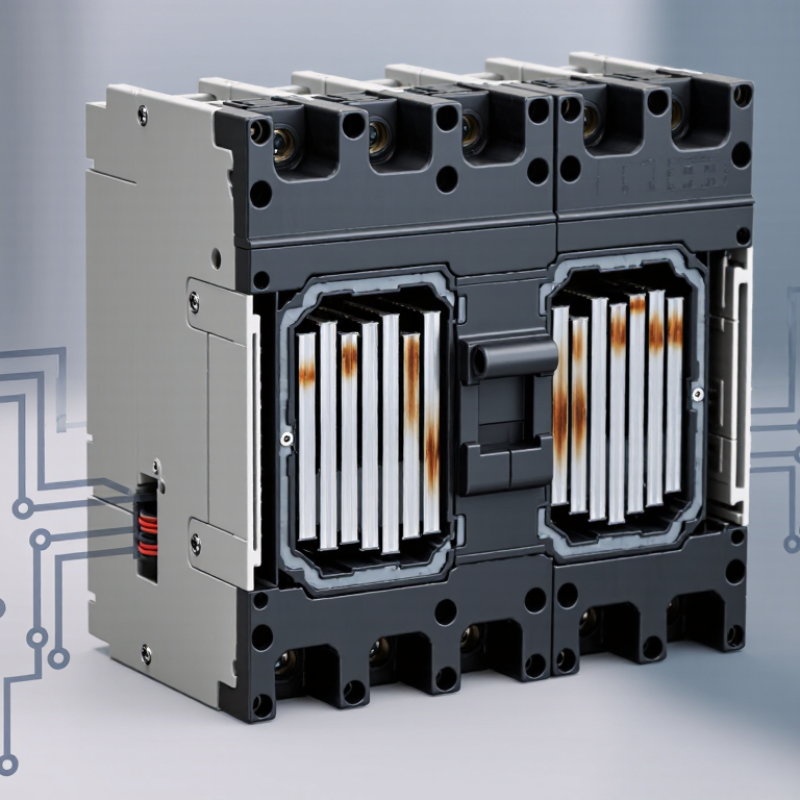
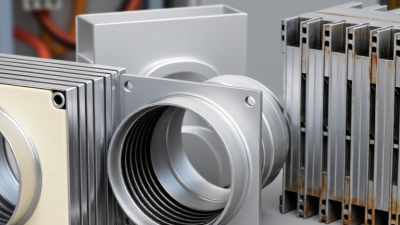
An MCCB arc extinguishing chamber is the internal space that controls and cools an electrical arc when contacts separate. MCCB means molded case circuit breaker. During a fault, current may continue flowing through ionized air. The chamber uses stacked metal plates, insulation barriers, and shaped vents. These parts stretch, divide, cool, and deionize the arc. The arc must disappear quickly. Otherwise, heat can damage contacts and nearby insulation.

When the breaker trips, moving contacts pull away from fixed contacts. An arc forms between them. Magnetic forces drive it into the chamber, where splitter plates divide it into shorter sections. Each section loses energy against cooler metal surfaces. Gas and heat then leave through designed channels. This process limits thermal stress and helps the breaker interrupt fault current safely. Chamber geometry matters. So do plate spacing, insulation quality, and ventilation.

Selecting an MCCB involves more than checking its current rating. Engineers should match interrupting capacity, voltage, enclosure conditions, and expected fault levels. Installation records and routine inspections provide practical evidence of reliability. Dust, loose terminals, or damaged insulation can reduce performance. A chamber may look intact and still need testing. That detail is easy to underestimate. Not every failure is obvious. Good design reduces risk, while correct coordination and maintenance remain essential.
How Does an MCCB Arc Extinguishing Chamber Work?

Why Choose an MCCB Arc Extinguishing Chamber?

How Does an MCCB Arc Extinguishing Chamber Work?

When an MCCB interrupts a fault, its contacts separate quickly. An electric arc forms between them. Without control, this arc can damage contacts and surrounding insulation. The arc extinguishing chamber provides a controlled path for this intense energy.

Inside the chamber, arc runners guide the arc toward several metal splitter plates. These plates divide the arc into smaller sections. They also cool and lengthen it. As the arc stretches, its electrical resistance increases.

The insulating material absorbs heat, while ventilation helps release hot gases. At the next current zero, the weakened arc disappears.

The process is fast.

In practical testing, chamber performance depends on contact speed, fault current, plate spacing, and enclosure design. A dirty or damaged chamber may interrupt less reliably. That detail is easy to overlook. Engineers should inspect discoloration, cracked insulation, loose components, and blocked exhaust paths during maintenance. Correct tightening torque also matters because loose connections create extra heat.

Tips: Select a chamber rated for the MCCB’s voltage and interrupting capacity. Keep the chamber dry and clean. Follow the manufacturer’s maintenance instructions. Never assume a visually normal chamber is electrically healthy. Testing equipment is safer than guesswork.

What Functions Does the Chamber Perform During Faults?

Why Choose an MCCB Arc Extinguishing Chamber?

What Functions Does the Chamber Perform During Faults?

When an MCCB interrupts a short circuit, an arc forms between separating contacts. The arc chamber controls this dangerous energy. Its metal splitter plates divide the arc into smaller sections. This increases the arc voltage and helps extinguish it quickly. The chamber also cools and de-ionizes hot gases. These actions reduce contact damage and limit the energy passing through the circuit.

The IEC 60947-2 standard evaluates low-voltage circuit breakers through demanding short-circuit tests. These tests examine interruption performance, insulation recovery, and repeated operation. The U.S. Bureau of Labor Statistics reported 126 fatal occupational injuries involving electricity in 2022. An arc chamber cannot remove every electrical hazard. However, it can reduce fault duration when correctly selected and maintained. In real panels, blocked vents, loose connections, or damaged plates can weaken its performance. That detail is easy to overlook.

Tips: Check the breaker’s interrupting rating against the available fault current. Inspect the chamber for soot, cracks, moisture, or distorted plates. Follow the manufacturer’s service instructions and applicable IEC or national requirements. Do not assume a higher current rating means better protection. Settings, cable size, coordination, and enclosure design matter too. A careful inspection may reveal an imperfect installation before a fault exposes it.

Why Choose an MCCB Arc Extinguishing Chamber?

Why Choose an MCCB Arc Extinguishing Chamber?

An MCCB arc extinguishing chamber controls the arc created when contacts separate during a fault. Its metal plates divide, cool, and lengthen the arc. This helps the breaker interrupt current safely and quickly. In practical inspections, damaged plates often show heat marks, soot, or distorted vents. These signs should not be ignored. A chamber is not a magic shield. Its performance depends on correct voltage, interrupting capacity, installation, and maintenance. IEC 60947-2 provides the main technical framework for low-voltage circuit breakers, including verification of short-circuit performance. NFPA research reported 35,150 home fires involving electrical distribution and lighting equipment each year from 2012 to 2016. The report also recorded about 470 deaths and 1,100 injuries annually. These figures are not specific to MCCBs, but they show why fault interruption deserves careful engineering.

Tips: Check the chamber’s rated voltage and short-circuit capacity before selection. Inspect arc plates during scheduled maintenance. Look for carbon deposits, cracks, loose barriers, and blocked exhaust paths. Keep the enclosure clean and dry. A small mistake in coordination can create excessive fault energy. Protection settings should match the cable size and connected load. Do not replace internal parts without approved technical procedures. I would also document each inspection with photographs. Records reveal deterioration that memory misses. Yet, inspection alone is imperfect; aging insulation, installation errors, and poor coordination can still defeat a healthy chamber.

Why Choose an MCCB Arc Extinguishing Chamber?

Key technical characteristics and practical benefits of arc extinguishing chambers used in molded-case circuit breakers.

Evaluation Dimension Typical Technical Data How the Chamber Helps Practical Selection Value
Rated operational voltage Common low-voltage MCCB applications: up to 690 V AC, depending on the design and applicable standard. Splits and cools the arc while increasing the electrical insulation distance between contacts. Supports safe interruption at the intended system voltage.
Short-circuit interrupting capacity Typical product ratings range from approximately 10 kA to 100 kA at specified voltage and power-factor conditions. Metal splitter plates divide the arc into smaller sections and help reduce arc energy. Improves the breaker’s ability to interrupt high fault currents without external arc-control equipment.
Arc duration Usually limited to a few milliseconds to several tens of milliseconds, depending on current level and breaker mechanism. Deionizing and cooling surfaces accelerate arc extinction after contact separation. Reduces thermal and mechanical stress on contacts and nearby insulation.
Arc energy management Arc energy depends strongly on fault current, clearing time, system voltage, and circuit impedance. The chamber confines the arc and helps distribute energy across multiple plates. Limits damage to the contact system and helps improve service reliability.
Contact protection Contacts are exposed to intense heat, electromagnetic forces, and material erosion during fault interruption. The chamber directs the arc away from the main contact area and reduces direct heat transfer. Helps preserve contact performance over repeated switching and fault events.
Arc gas and pressure control Fault interruption can generate hot gases and rapid pressure changes inside the breaker enclosure. Vents and chamber geometry guide gases through designated paths and help control internal pressure. Supports enclosure integrity and reduces the risk of uncontrolled arc discharge.
Insulation coordination Clearance and creepage requirements vary with voltage, pollution level, material group, and installation environment. Provides a controlled arc path and increases the effective insulation distance after interruption. Helps meet electrical safety requirements in industrial and commercial distribution systems.
Compact construction MCCBs integrate switching, protection, and arc interruption in one molded enclosure. A dedicated chamber delivers controlled arc extinction without requiring a large open-air interrupting structure. Saves panel space and simplifies installation in low-voltage switchboards.
Maintenance considerations The chamber should be inspected for plate damage, carbon deposits, cracks, blocked vents, and heat discoloration after severe faults. Replaceable or inspectable chamber components can make post-fault assessment more practical. Supports safer maintenance decisions and helps identify when breaker replacement is necessary.
Compliance testing Performance is commonly evaluated under low-voltage circuit-breaker standards such as IEC 60947-2 or relevant national equivalents. The chamber is tested as part of the complete breaker assembly for temperature rise, dielectric performance, and short-circuit interruption. Provides confidence that the selected MCCB is suitable for the specified application and fault level.

Engineering note: The values shown are typical low-voltage MCCB application ranges and general design characteristics. Actual interrupting capacity, voltage rating, arc duration, dimensions, and maintenance requirements must be confirmed from the specific product documentation and applicable installation standard.

How to Evaluate Chamber Performance and Compatibility?

Why Choose an MCCB Arc Extinguishing Chamber?

How to Evaluate Chamber Performance and Compatibility?

Choosing an MCCB arc extinguishing chamber starts with operating conditions, not catalogue appearance. The chamber must match the breaker’s rated voltage, short-circuit current, frequency, and pole arrangement. Check arc splitter spacing, vent paths, insulation distance, and mounting points against the complete assembly. Small alignment errors can redirect hot gases toward insulation or nearby wiring. That detail matters.

During evaluation, inspect test evidence linked to IEC 60947-2 or an equivalent requirement. Look for interrupting tests at the intended current, voltage, and power factor. A chamber that survives one laboratory test may still perform poorly after repeated operations. Review arc duration, contact erosion, temperature rise, and dielectric recovery. Ask whether the test setup represents the actual enclosure, conductor size, and ventilation conditions. I have seen designs pass nominal testing, then show soot near the exhaust after repeated switching. The result was not immediately dangerous, but it required deeper review.

Compatibility also depends on material stability and production tolerance. Compare resin temperature ratings, flame resistance, moisture response, and dimensional limits. Measure the chamber, rather than trusting a drawing alone. Verify screw torque, guide features, and clearance from moving contacts. Environmental tests should include heat, humidity, vibration, and dust where relevant. One overlooked issue is replacement fit; a slightly different splitter stack can change arc behavior. Leave room for inspection. Performance data is useful, but field feedback and failed assumptions often reveal the real weakness.