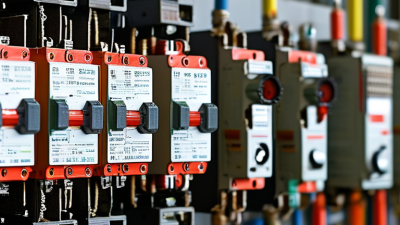
China Top MCCB Parts Manufacturers and Suppliers?
China has become a major sourcing base for molded case circuit breaker components. Its manufacturers supply components for industrial panels, commercial buildings, renewable energy systems, and control equipment. However, choosing reliable Mccb Parts suppliers requires more than comparing online prices. Product consistency matters.
This guide examines China’s leading Mccb Parts manufacturers and suppliers through practical purchasing criteria. It considers production experience, material control, machining accuracy, testing capability, and after-sales support. Important components may include molded housings, operating mechanisms, contacts, terminals, arc chutes, trip units, and mounting accessories. Each part must fit the breaker’s electrical and mechanical requirements. Small dimensional errors can affect assembly, heat resistance, or operating reliability.
Look beyond the catalog.
Experienced buyers should request technical drawings, material specifications, batch inspection records, and sample reports. Suppliers with documented quality systems usually provide clearer answers. Independent testing can also support confidence when applications involve high current or frequent switching. Still, certification alone is not enough. A certificate may not explain how a factory controls daily production.
Factory audits can reveal useful details. Observe injection molding machines, stamping lines, contact assembly areas, and final inspection stations. Ask how rejected parts are separated and recorded. No supplier is perfect. Even established factories may face delays, tooling changes, or communication gaps. That reality deserves attention.
The following overview compares manufacturers by product range, customization ability, quality practices, export experience, and response speed. It also highlights questions buyers should ask before signing a supply agreement. The goal is practical selection, not empty promotion. Reliable sourcing begins with evidence, careful samples, and clear technical communication.
MCCB Parts: Functions, Types, and Essential Components
MCCB parts determine how safely a molded-case circuit breaker performs.
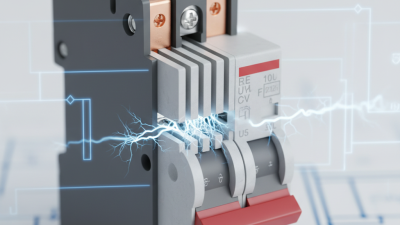
The housing provides insulation and mechanical strength, while the operating mechanism opens contacts during faults.
Thermal-magnetic trip units respond to overloads and short circuits.
Electronic trip units offer adjustable pickup, delay, and ground-fault settings.
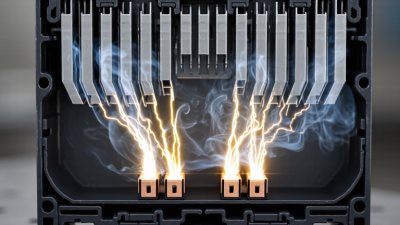
Arc chutes split and cool the arc when contacts separate. Terminals, shunts, auxiliary contacts, and alarm contacts support installation and monitoring.
The main MCCB types include thermal-magnetic, electronic, fixed-trip, adjustable-trip, two-pole, three-pole, and four-pole designs.
Each choice affects protection accuracy, wiring space, and maintenance needs.
IEC 60947-2 requires verified performance for low-voltage circuit breakers, including breaking capacity and temperature-rise tests.
The IEA Electricity 2024 report forecasts global electricity demand growth of about 4% annually through 2026. That growth increases pressure on distribution equipment and replacement parts.
During supplier evaluations, I inspect contact materials, terminal torque, insulation clearance, and trip-unit calibration records.
A clean datasheet helps, but it is not proof. Sample testing still matters.
Poorly fitted arc runners can leave burn marks after one severe interruption.
Incorrect auxiliary-contact ratings may also create false signals in control panels.
I have seen suppliers describe interchangeable parts too confidently.
Compatibility should be confirmed through frame size, rated current, interrupting capacity, connection method, and tested coordination data.
Small differences matter.
How to Evaluate China’s MCCB Parts Manufacturers
Evaluating China’s MCCB parts manufacturers requires more than comparing catalog prices.
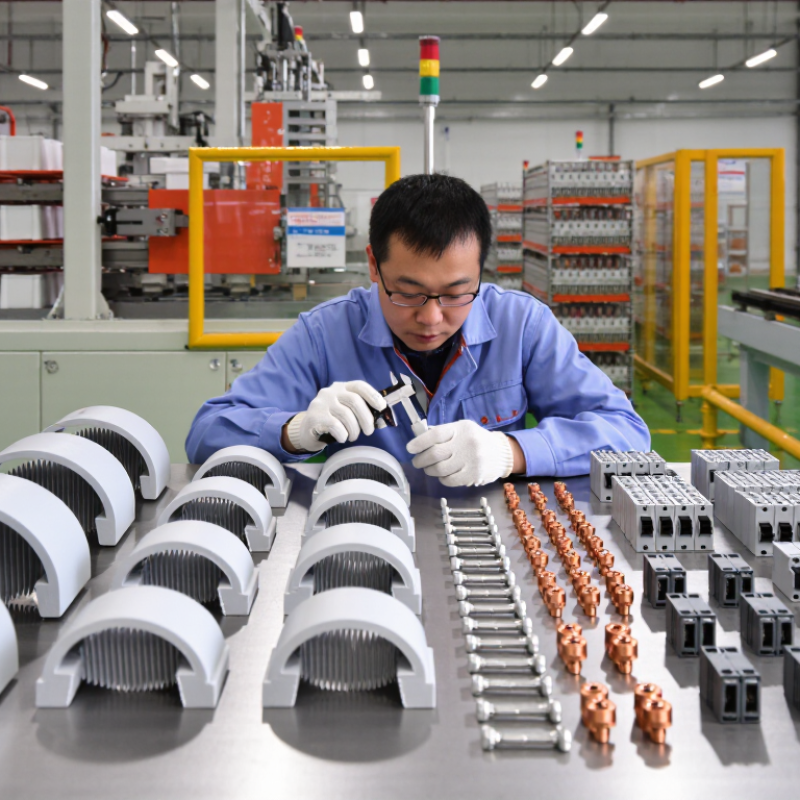
Start with drawings, material specifications, and production records. Ask whether molded cases use consistent insulation grades and controlled dimensions. For terminals, inspect plating thickness, thread accuracy, and torque performance. Small deviations can create heat during continuous current. That matters. Request representative samples, not specially polished pieces. Test contact resistance, dielectric strength, trip characteristics, and mechanical endurance through an independent laboratory when possible. A factory should provide calibrated equipment records and clear acceptance limits. Vague reports weaken confidence.
Production capability also deserves a close look.
Review incoming inspection, in-process checks, and final packing procedures. Traceability should connect each batch to operators, machines, and raw materials. Visit the facility if the order is technically important. Look at storage conditions. Copper parts need protection from contamination and moisture. Ask how rejected components are isolated and corrected. A supplier that hides nonconformities may create greater risk later. However, no factory is flawless. I would judge the speed and honesty of corrective action, not only the first audit score. That distinction is easy to miss.
Align test plans with IEC 60947-2 where applicable, while checking your own application requirements.
Confirm tooling ownership, replacement lead times, packaging design, and change-notification procedures. Clarify whether production changes require approval before shipment. A written quality agreement prevents assumptions. Compare three suppliers using the same checklist. Price belongs on that list, but not at its top. The lowest quote may conceal thinner plating, weaker springs, or unstable testing. A checklist can still miss a weak process. Reliable evaluation needs evidence, repeat testing, and uncomfortable questions.
Leading Chinese MCCB Parts Manufacturers and Suppliers
China Top MCCB Parts Manufacturers and Suppliers?
China has become a major sourcing base for molded case circuit breaker parts. Its suppliers commonly produce housings, arc chutes, terminals, operating mechanisms, trip units, and contact systems. The supply chain is broad. Quality, however, is uneven.
Grand View Research estimated the global circuit breaker market at about USD 7.36 billion in 2023. It also forecast steady growth through 2030. This demand supports deeper Chinese manufacturing capacity. Leading Chinese MCCB parts manufacturers usually combine precision molding, metal stamping, heat treatment, and electrical testing. Reliable suppliers should provide dimensional reports, material certificates, batch records, and verification against IEC 60947-2. A supplier with only attractive pricing may still create costly assembly problems. That point deserves more attention.
Tips: Ask for samples from regular production, not specially prepared units. Check contact resistance, insulation performance, mechanical endurance, and thermal behavior. Review factory calibration records and traceability procedures. Confirm whether the supplier supports small pilot orders. Communication quality matters, too. A clear drawing often prevents a poor shipment. Buyers should also compare tolerances, delivery stability, packaging protection, and corrective-action speed. No factory is perfect. A thoughtful audit can reveal weaknesses before they reach the panel.
MCCB Parts Quality Standards, Testing, and Certifications
When evaluating China’s MCCB parts manufacturers and suppliers, quality starts with controlled materials and consistent machining. Critical parts include molded housings, copper contacts, arc runners, terminals, springs, and thermal-magnetic trip units. Each component should match approved drawings, tolerances, and material specifications. Traceability matters.
Reliable suppliers normally operate documented quality systems, often aligned with ISO 9001. Their test plans should reference applicable standards, such as IEC 60947-2 or UL 489, depending on the target market. Certification must match the complete breaker assembly, not merely an isolated component. A certificate alone proves little without test records, revision control, and production traceability.
Practical inspection should include dimensional checks, contact resistance, insulation resistance, dielectric withstand, temperature-rise testing, and mechanical endurance. Short-circuit testing requires suitable accredited laboratories and clearly defined ratings. Salt-spray or humidity tests may reveal weak plating and poor corrosion protection. Small defects spread. Suppliers should provide batch numbers, calibration records, material certificates, and corrective-action reports. It is wise to audit first-article samples before approving mass production. One common mistake is trusting attractive samples while ignoring process capability. That deserves reflection. Quality can drift after tooling changes, new operators, or substituted materials, so periodic requalification remains necessary.
How to Choose the Right China-Based MCCB Parts Supplier
Choosing a China-based MCCB parts supplier requires more than comparing quotations. Start by defining the exact part, material, dimensions, and operating conditions. Common items include molded housings, arc chutes, terminals, contacts, trip units, springs, and operating handles. A reliable supplier should provide controlled drawings, material certificates, and clear production tolerances. Small details matter.
Ask how the supplier manages incoming materials, tooling changes, and final inspection. For electrical parts, request relevant test records, including insulation performance, temperature rise, mechanical endurance, and short-circuit capability. Components should align with applicable standards such as IEC 60947-2. Check whether the supplier can provide batch traceability through labels, inspection records, and retained samples. This reduces uncertainty when a field problem appears months later.
Visit the factory if possible. Observe storage conditions, calibration labels, assembly cleanliness, and packing methods. A supplier with engineers who understand contact pressure, heat resistance, and dimensional matching is usually safer than a trading company with limited technical control. Request samples before approving mass production. Compare them with your existing MCCB assembly, not only with a drawing. One overlooked spring force or terminal thickness can affect protection performance. Price still matters, but the cheapest offer can become expensive after rework, delayed testing, or rejected shipments. No supplier is perfect. I would document every assumption and review the specification again before signing a purchase agreement.