Leave Your Message

China Top RCCB Parts Manufacturers for Global Buyers

China has become a significant sourcing base for RCCB components, serving distributors, panel builders, and electrical equipment brands worldwide. This guide introduces China’s leading Rccb Parts manufacturers and explains how global buyers can assess them with greater confidence. The focus remains practical: product consistency, technical support, documentation, and long-term supply stability.

Reliable manufacturers usually provide essential components such as contact systems, trip mechanisms, terminals, enclosures, arc barriers, and internal accessories. These parts must work together precisely inside a residual current circuit breaker. A small dimensional error can affect assembly speed or operating performance. Fit comes first. Material quality matters too.

Experienced buyers often request drawings, material specifications, sample approvals, and batch inspection records before placing large orders. They may also review factory equipment, testing procedures, production capacity, and quality management practices. Independent verification can strengthen this process, especially when supplier claims seem broad. No supplier is perfect. Even a capable factory may face tooling delays, communication gaps, or inconsistent subcontracting.

Manufacturers serving international markets should understand relevant electrical safety requirements and provide clear technical files. However, certification names alone do not prove dependable performance. Test methods, traceability, change control, and after-sales response deserve equal attention. Buyers should compare actual evidence, not attractive catalogs. This article offers a careful starting point for identifying suitable Rccb Parts suppliers in China, while recognizing that final qualification requires samples, technical review, and application-specific testing.

China Top RCCB Parts Manufacturers for Global Buyers

RCCB Parts: Functions, Standards, and Essential Components

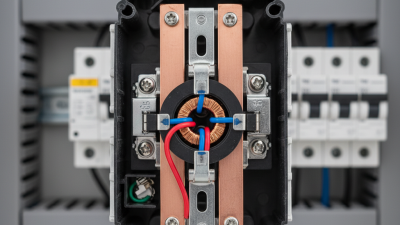
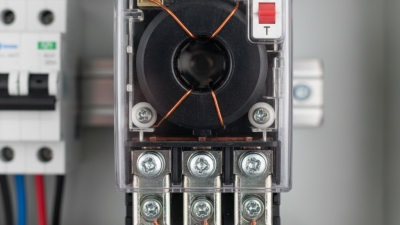
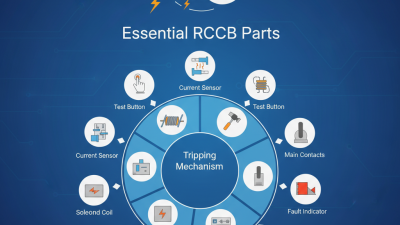
RCCB parts determine how reliably a device detects leakage and disconnects power. The sensing core uses a toroidal transformer to compare outgoing and returning current. Any imbalance creates a trip signal. The release mechanism then opens the contacts, while the test circuit checks basic operation. Simple in theory.

IEC 61008-1 covers residual current circuit-breakers without integral overcurrent protection. IEC 62423 adds requirements for Type F and Type B detection. These types can respond to mixed-frequency or smooth direct residual currents. A 30 mA RCCB commonly provides additional personal protection in low-voltage installations. IEC 60364-4-41 identifies this application for many final circuits. China-based manufacturers should control contact pressure, insulation distance, spring fatigue, and terminal heating during production.

Market evidence supports careful component selection. Mordor Intelligence’s 2024 analysis estimated continued growth in the global residual current protection market through 2029, driven by construction, renewable energy, and charging infrastructure. The International Energy Agency reported that global electricity demand rose strongly in 2024, increasing demand for dependable protection equipment. In practical audits, loose terminals remain a frequent weakness. Some suppliers test trip time but overlook temperature rise. That is not enough. Buyers should request calibrated test records, batch traceability, material declarations, and endurance results. Standards guide design, but repeated verification proves reliability.
How to Evaluate Chinese RCCB Parts Manufacturers

Evaluating Chinese RCCB parts manufacturers requires more than comparing prices. Examine the parts that control safety: copper contacts, magnetic trip components, terminals, insulation barriers, and the residual-current sensing assembly. Ask for material grades, dimensional tolerances, and batch traceability. A supplier should explain how each item is inspected, not simply provide a polished catalog.

Request production samples from different batches. Test contact resistance, insulation strength, temperature rise, and mechanical endurance through an independent laboratory when possible. For sensing and trip components, verify response consistency at the specified leakage current. Manufacturers familiar with IEC 61008 or IEC 61009 requirements should provide clear test records, corrective-action reports, and controlled technical drawings. Certificates help, but they do not replace physical verification.

Visit the factory, or arrange a documented remote audit. Look for calibrated equipment, clean assembly areas, trained inspectors, and separated storage for approved materials. Ask how rejected parts are identified and prevented from returning to production. A fast answer is not always a reliable answer. Production capacity also needs evidence, such as equipment lists, staffing plans, and realistic lead times. In practice, a perfect first sample can mislead; small changes in plating, spring force, or plastic formulation may appear later. Keep approval samples, define change-notification rules, and review performance after the first shipments. Clear communication matters, especially when drawings contain translation gaps or unspoken tolerances.

China Top RCCB Parts Manufacturers for Global Buyers - How to Evaluate Chinese RCCB Parts Manufacturers
Evaluation Dimension What Global Buyers Should Verify Objective Evidence or Applicable Reference Recommended Benchmark Suggested Weight Typical Risk if Unverified
Product Scope and Part Compatibility Confirm whether the supplier produces complete RCCB assemblies or specific parts such as toroidal current transformers, contact systems, trip mechanisms, terminals, test buttons, housings and internal conductors. Part drawings, bill of materials, dimensional tolerances, material specifications and compatibility matrix for the intended RCCB construction. Each critical part should have a controlled drawing, revision number and defined inspection characteristics before mass production. 12% Dimensional mismatch, unstable assembly fit or expensive redesign.
Compliance with RCCB Standards Check the intended product category and the applicable technical standard for residual current circuit-breakers without integral overcurrent protection. Test reports and certificates referencing IEC 61008-1 or the applicable national adoption of this standard. For RCBO-related products, verify whether IEC 61009-1 applies instead. The supplied parts and finished assembly should be traceable to the design tested under the applicable standard; certificates should identify the exact model or construction family. 15% Failed type testing, customs concerns or inability to support market approval.
Rated Electrical Parameters Verify rated current, number of poles, rated residual operating current and RCCB type required by the application. Electrical specification sheet, test records and sample markings covering common configurations such as 2-pole or 4-pole designs, 30 mA, 100 mA or 300 mA sensitivity, and Type AC or Type A operation. All parameters must match the buyer's approved specification. Type A should be considered where pulsating DC residual currents may occur; the application determines the correct selection. 14% Nuisance tripping, failure to trip or unsafe protection performance.
Residual-Current Detection Performance Evaluate the sensitivity and repeatability of the magnetic circuit, toroidal transformer and trip-control components. Routine test data, residual-current trip measurements, response-time records and calibration method for test equipment. Trip-current and trip-time results should remain within the limits specified by the approved product standard and design documentation across the declared operating conditions. 15% Delayed tripping, false tripping or failure to provide the intended shock and leakage protection.
Contact System and Electrical Endurance Review contact material, contact pressure, welding resistance, terminal construction and mechanical endurance of the switching mechanism. Contact-material declaration, contact-resistance results, mechanical endurance records and electrical endurance test reports from an approved laboratory or controlled internal laboratory. The contact system should be validated for the declared rated current and endurance category, with lot-based contact-resistance inspection. 12% Overheating, contact welding, excessive voltage drop or premature failure.
Insulation and Dielectric Safety Confirm insulation distance, dielectric strength, insulation resistance and resistance to abnormal heat for insulating parts. Dielectric withstand results, insulation-resistance records, material data sheets and flammability information for the housing and insulation components. Insulation and dielectric tests should be performed according to the applicable RCCB standard and the approved production-control plan. 12% Electric shock hazard, flashover, insulation breakdown or nonconformity during certification testing.
Material and Environmental Compliance Check restricted substances, plastic composition, metal plating and material consistency for parts supplied to international markets. Material declarations, supplier declarations and, where required, laboratory screening related to RoHS and REACH obligations. The supplier should maintain a current material compliance file and notify buyers before changing any safety-critical material or plating process. 8% Market-access delays, restricted-substance nonconformity or inconsistent product quality.
Quality Management and Traceability Assess process control, incoming inspection, in-process inspection, final testing, nonconforming-product control and batch traceability. Quality manual, process flow chart, inspection plan, calibration records, corrective-action reports and lot identification procedure. ISO 9001 certification may support the assessment but does not replace product testing. Every shipment should be traceable to a production lot, inspection record, material batch and approved drawing revision. 7% Difficult root-cause analysis, mixed-quality shipments or repeated field failures.
Sample Validation and Change Control Make sure samples, pilot batches and mass-production parts are manufactured under comparable processes and tooling conditions. Golden sample, first-article inspection report, tooling records, engineering-change notices and documented approval process for changes to materials, dimensions or suppliers. No safety-critical change should be implemented without written buyer notification, risk assessment and sample re-approval where applicable. 5% Mass-production performance differs from approved samples.
Buyer scoring method: Score each dimension from 0 to 5, multiply by the suggested weight, and compare suppliers using the same evidence requirements. The applicable RCCB standard, certification route and electrical ratings should always be confirmed for the destination market and final product design.

China’s Leading RCCB Parts Manufacturing Capabilities

China’s RCCB parts manufacturing sector combines metal stamping, plastic injection molding, precision assembly, and electrical testing. Manufacturers produce terminals, contact systems, trip mechanisms, insulating housings, handles, and differential sensing components. These parts support RCCB performance in residential, commercial, and industrial distribution panels.

Production lines often use progressive stamping presses for copper and alloy contacts. Injection molding machines form flame-resistant housings with controlled dimensions. Assembly teams check spring tension, latch movement, and terminal torque. Testing may include insulation resistance, dielectric strength, leakage-current response, temperature rise, and mechanical endurance. Traceable batches help buyers investigate defects without guessing.

Details matter. A slightly distorted terminal can create heat during operation. A small mold shift may affect housing fit. No factory is flawless. Reliable manufacturers review these weak points through sampling plans, first-article inspections, and corrective-action records. Experienced suppliers can also provide drawings, material certificates, inspection reports, and customized packaging for overseas shipments. Buyers should still verify test methods, tolerances, production capacity, and sample consistency before approving mass production. Capability needs evidence.

Quality Control and Certification for Global RCCB Buyers

Global RCCB buyers should examine quality control before comparing prices. A reliable parts manufacturer starts with controlled incoming inspection. Copper terminals, springs, insulating housings, and contact materials need documented specifications. Inspectors should verify dimensions with calibrated gauges, not visual judgment alone.

Production records should connect each batch to operators, machines, and raw materials. Critical tests include insulation resistance, dielectric strength, temperature rise, leakage current, and trip time. Test benches require regular calibration. A failed sample must trigger investigation, not simple replacement. Mechanical endurance testing can reveal weak springs or unstable contact pressure. Small details matter. A loose terminal may create heat after months of service.

Certification should match the destination market and product scope. Buyers commonly review evidence related to IEC 61008-1, applicable national requirements, and recognized conformity marks. Certificates alone are not enough. Request current reports, laboratory identities, test dates, and model references. Independent laboratory testing adds useful confidence when documents appear unclear. Factory audits can also confirm whether production conditions match certification samples.

Some suppliers test only finished RCCBs. That approach misses defects introduced during molding or assembly. A stronger system checks components at several stages. It also retains samples for later comparison. No quality plan predicts every installation condition. Humidity, wiring errors, and poor maintenance still affect field performance. Buyers should question inconsistent samples and ask for corrective-action records. Honest manufacturers can explain weaknesses without hiding them. That response is often more valuable than polished paperwork.

China Top RCCB Parts Manufacturers for Global Buyers: Quality Control and Certification

Common rated residual operating currents (IΔn) used when specifying RCCBs for international markets

The chart shows widely used RCCB sensitivity ratings of 10, 30, 100, 300 and 500 mA. A 30 mA device is commonly selected for additional protection against electric shock, while higher ratings are typically used for equipment or fire protection coordination. Global buyers should confirm product compliance with the applicable edition of IEC 61008-1, verify type requirements such as AC, A, F or B where relevant, and request traceable test reports and market-specific certification before approval.

Sourcing, Customization, and Export Support from China

China’s RCCB parts manufacturers support global buyers with sourcing, customization, and export coordination. Common parts include contact systems, trip mechanisms, terminals, test buttons, arc barriers, and molded enclosures. Each component affects safety, service life, and assembly consistency.

One lesson from factory projects is simple: the first specification is rarely complete. Buyers should share drawings, target ratings, materials, tolerances, and annual demand early. Experienced suppliers can suggest design changes, but every recommendation needs sample testing. Customization may involve tooling, surface treatment, packaging, or automated assembly. Small details matter. A loose terminal fit can create costly rework.

Tips: Request material certificates, dimensional reports, sample records, and production photos. Confirm whether testing follows relevant IEC requirements, such as IEC 61008 or IEC 61009, when applicable. Ask for traceability from raw material to finished batch. Export support should include commercial documents, packing details, shipment coordination, and clear responsibility for inspection. Do not rely on attractive samples alone. Check repeated production performance. Regional requirements may differ, so local certification review remains necessary. Mistakes can happen, especially when translations or tolerance units are unclear. A written approval process reduces that risk. Reliable manufacturers communicate limitations instead of promising everything.