Leave Your Message

10 Best RCCB Parts Suppliers for Global Buyers?

Choosing reliable suppliers for Rccb Parts requires more than comparing prices or browsing attractive product catalogs. Global buyers must examine contact quality, insulation strength, trip mechanisms, terminal materials, and testing records. A small spring, shield, or sensing coil can affect an entire RCCB’s response during an earth-leakage event. That detail is easy to overlook. It should not be.

Electrical safety consultant Dr. Peter Schick states, “An RCCB is only as dependable as the smallest part inside it.” His observation reflects a practical truth: dependable suppliers provide traceable materials, stable production, clear technical data, and consistent quality checks. The best partners also understand regional voltage systems, certification expectations, packaging risks, and replacement compatibility. However, supplier claims still require verification. Certificates may be valid, yet production quality can vary between batches. Buyers should request test reports, sample parts, factory information, and realistic lead times before signing large contracts.

This guide introduces ten Rccb Parts suppliers serving international markets. It considers product range, manufacturing capability, documentation, customization, communication, and after-sales support. Some suppliers may appear excellent on paper but offer limited technical assistance. Others may have strong engineering teams but slower delivery. That difference matters when a production line is waiting for one missing component.

The selection is not a final judgment. It is a practical starting point. Buyers should compare suppliers against their own safety requirements, application conditions, and compliance responsibilities. A careful decision today can prevent costly failures tomorrow.

10 Best RCCB Parts Suppliers for Global Buyers?

RCCB Parts: Types, Functions, and Global Applications

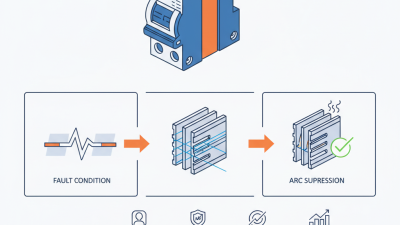
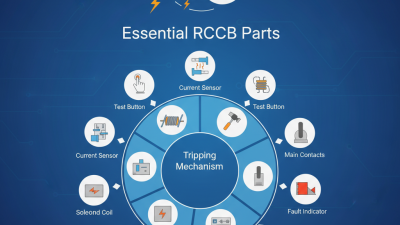
Residual Current Circuit Breaker (RCCB) parts determine how safely a device detects leakage and disconnects power. The toroidal sensing core surrounds the live and neutral conductors. Under normal conditions, their currents balance. Leakage creates an imbalance, and the sensing coil sends a signal to the trip mechanism. The trip relay then opens the main contacts within a short time. Terminals, arc barriers, the test button, and the insulated enclosure support safe operation.

Small parts matter.

Common RCCB types include two-pole units for single-phase circuits and four-pole units for three-phase systems.

Type AC detects alternating residual currents.

Type A also responds to pulsating DC leakage from electronic equipment.

Type B supports smoother DC detection, which can matter in selected charging and industrial applications.

Sensitivity ratings, such as 30 mA, must match the intended protection level and local requirements. An RCCB does not replace overload protection. It usually works beside a suitable circuit breaker.

Global applications range from household distribution boards to workshops, construction sites, agricultural facilities, and commercial buildings. Humid areas require careful enclosure selection and reliable terminal sealing.

During field inspections, loose terminals and poorly tested buttons appear more often than expected. That is a useful warning.

Buyers should verify contact materials, operating temperature, electrical endurance, test records, and certification for the target market. A neat datasheet can still hide weak quality control. Independent sample testing remains worthwhile, especially when parts come from unfamiliar supply chains.

How to Evaluate RCCB Parts Suppliers for International Purchasing

International buyers should assess RCCB parts suppliers through evidence, not polished catalogs. Start with engineering documents. Request dimensional drawings, material specifications, tolerance ranges, and test procedures for each component. Check whether the supplier can provide batch traceability and consistent revision control. Certificates should match the actual part, production site, and testing scope. Generic documents deserve careful questioning.

Sample approval should happen before any large purchase. Inspect terminal fit, spring tension, contact alignment, and insulation surfaces. For critical parts, request test data from several production batches. Compare those records with your own inspection results. Do not judge quality from one perfect sample. A low unit price can hide weak packaging, unstable materials, or expensive replacements. In field purchasing, I would rather pay more for predictable performance. Still, my own evaluation may miss problems without independent testing.

International delivery adds practical risks. Confirm minimum order quantities, lead times, production capacity, and accepted payment terms. Ask how the supplier manages shortages, rejected batches, and engineering changes. Use clear packaging specifications, especially for small springs and molded components. Communication also deserves testing. Send one technical question and observe the response time, accuracy, and willingness to show evidence. Vague answers are warning signs. A remote factory audit can help, although photographs alone are not enough. Consider an independent inspection before shipment when the part affects RCCB reliability.

10 Best RCCB Parts Suppliers for Global Buyers? How to Evaluate RCCB Parts Suppliers for International Purchasing

Anonymous supplier evaluation matrix for international RCCB component sourcing. Supplier identities and brands are intentionally omitted; all technical and compliance requirements should be verified against current certificates, test reports, drawings, samples, and purchase terms before contracting.
Rank Anonymous Supplier Profile Typical Supply Base RCCB Parts and Components Relevant Technical Standards Documents to Request International Purchasing Strength Main Verification Risk Best Fit for Buyers
1 Certified OEM Component Specialist Established electrical-component manufacturing region Magnetic circuits, trip mechanisms, contact assemblies, terminals, molded insulating parts IEC 61008-1 for RCCBs; IEC 61009-1 where RCBO-related parts are included; applicable material and insulation requirements Current third-party test reports, production drawings, material declarations, process-control records, sample approval report Stable batch supply Technical documentation Export packaging Certificate scope may not cover the exact part number or final assembly configuration High-volume OEM programs
2 Precision Stamping and Spring Supplier Asia-Pacific and Central European manufacturing clusters Copper contacts, silver-alloy contact rivets, stamped yokes, springs, clips, and retaining components Dimensional requirements derived from IEC 61008-1 or IEC 61009-1; RoHS and REACH requirements where applicable Alloy composition certificates, plating thickness records, hardness data, dimensional inspection reports, PPAP or equivalent quality file Custom tooling Repeatability Competitive unit cost Contact resistance and spring-force consistency can vary if process capability is not monitored Custom metal parts
3 Thermoset and Thermoplastic Molding Supplier Mature plastics and electrical-insulation production centers Arc barriers, housings, carriers, terminal blocks, insulation barriers, and molded internal supports IEC 61008-1 insulation and dielectric requirements; IEC 60695-related flammability evaluation where specified by the design Resin data sheets, UL or equivalent material files where required, flammability test data, dimensional reports, mold-maintenance records Tooling support High repeatability Color control Resin substitution, shrinkage, flash, or warpage may affect creepage and clearance distances Insulation-critical parts
4 Magnetic and Electromechanical Subassembly Supplier Industrial automation and low-voltage apparatus manufacturing hubs Toroidal cores, differential transformers, coils, armatures, magnetic shunts, and trip subassemblies RCCB performance requirements under IEC 61008-1; insulation-system requirements based on rated voltage and operating temperature Core material data, inductance and sensitivity test results, winding specifications, temperature-rise data, 100% electrical-test records Engineering cooperation Functional testing Subassembly delivery Small changes in core material, winding geometry, or air gap can change tripping sensitivity Protection-mechanism design
5 Terminal and Connection-System Supplier Global terminal, connector, and switchgear component centers Terminals, screws, clamps, busbar interfaces, wire cages, and captive hardware IEC 61008-1 connection and temperature-rise requirements; relevant IEC requirements for terminals and conductor compatibility Torque-test results, conductor pull-out data, temperature-rise reports, corrosion-resistance data, plating and material certificates Broad conductor compatibility Standard packaging Replacement availability Incorrect torque, plating defects, or poor clamping geometry may increase contact heating Panel and distribution equipment
6 Compliance-Oriented Safety Component Supplier Markets with strong product-certification and traceability practices Safety-critical contact systems, trip links, insulating barriers, calibrated mechanisms, and replacement assemblies IEC 61008-1; IEC 61009-1 for applicable RCBO designs; national certification requirements determined by the destination market Certificate register, factory-audit records, change-control procedure, traceability plan, corrective-action history, lot inspection records Strong traceability Audit readiness Change notification A valid company certificate does not automatically validate every supplied component or configuration Regulated markets
7 Flexible Low-Volume Custom Supplier Engineering-driven small and medium manufacturing facilities Prototype housings, modified terminals, special brackets, custom springs, and low-volume subassemblies Design requirements should be mapped to IEC 61008-1, applicable customer drawings, and destination-market rules First-article inspection, sample approval record, capability study, drawing revision control, inspection-plan documentation Low minimum order Fast engineering changes Prototype support Capacity, tooling ownership, and long-term production continuity may be limited Product development and pilot runs
8 High-Volume Automated Assembly Supplier Large-scale electrical-appliance production regions Preassembled trip units, contact modules, terminal modules, molded mechanisms, and tested internal assemblies IEC 61008-1 functional and endurance requirements; customer-specific electrical, mechanical, and environmental specifications Automation validation, gauge calibration records, end-of-line test data, process-capability indexes, lot traceability information High capacity Short cycle time Consistent assembly A hidden process change or automated inspection gap can affect large quantities before detection Mass production
9 Regional Stocking and Export Distributor Major electrical distribution and logistics centers Standard replacement terminals, housings, contact kits, mechanism parts, and maintenance components Product compliance depends on the original manufacturer and exact part number; verify applicable IEC documentation Manufacturer authorization where relevant, batch identification, original packaging records, product datasheets, country-of-origin data Short lead time Small orders Multi-country shipping Mixed batches, obsolete revisions, or non-authorized substitutions may enter the supply chain Maintenance and urgent replenishment
10 Integrated Design-to-Supply Partner Engineering and manufacturing locations serving international OEMs Complete RCCB internal kits, custom component designs, tooling, validation samples, and production assemblies IEC 61008-1; applicable EMC, material, insulation, environmental, and destination-market requirements defined by the final product Design-FMEA, verification plan, validation report, technical construction file, bill of materials, change-control and risk-management records Single-point coordination Design optimization Global sourcing support Dependence on one partner can create supply continuity and intellectual-property risks New product introduction
Recommended purchasing checks: confirm the exact part number and revision, validate material and dimensional specifications, review production-sample results, audit change-control procedures, clarify Incoterms and warranty terms, and verify that test reports apply to the intended final RCCB design and destination market.

Top 10 RCCB Parts Suppliers and Their Core Advantages

Top 10 RCCB Parts Suppliers and Their Core Advantages

Global demand for RCCB components is rising with stricter electrical safety requirements. A 2024 MarketsandMarkets report estimates the global circuit breaker market will grow steadily through 2030. IEC 61008-1 and IEC 62423 remain important references for residual-current protection. Buyers should verify test records, traceability, and production consistency before comparing prices.

The top ten supplier profiles include copper contact makers with strong conductivity, magnetic-core specialists offering stable sensing, and trip-mechanism suppliers known for fast response. Spring manufacturers provide accurate mechanical movement. Injection-molding suppliers deliver heat-resistant housings. Terminal suppliers support secure wiring. Arc-chute producers improve interruption performance. Electronic-module suppliers offer self-testing functions. Seal and gasket suppliers help resist dust and moisture. Assembly partners provide flexible customization and inspection support.

Each advantage matters in a different failure scenario. A precise core can reduce unwanted tripping. A durable contact limits heating at high current.

In my purchasing experience, small dimensional errors often create larger assembly problems.

Suppliers with batch-level records are easier to audit. However, the ranking is not absolute. A lower-cost source may perform well under laboratory conditions but weaken after repeated temperature cycling. Buyers should request samples, endurance results, RoHS documentation, and independent test evidence. Supplier websites are useful, but they are not enough. Availability can also change quickly when copper and electronic component prices move.

RCCB Quality Standards, Certifications, and Compatibility Factors

For global buyers, RCCB quality begins with the standard behind the product. IEC 61008-1 is a key reference for residual current circuit-breakers without integral overcurrent protection. Buyers should confirm the applicable national adoption and test scope. A certificate number alone proves little. Check the issuing body, validity period, product family, and rated specifications.

Compatibility deserves equal attention. Verify rated voltage, frequency, current, residual operating current, pole configuration, and RCCB type. Type AC suits many basic alternating-current loads, while Type A detects pulsating direct residual currents. Type F or Type B may be necessary for equipment with variable-speed drives or smooth DC leakage. The RCCB must also coordinate with a suitable overcurrent protective device. It does not replace one. Small details matter.

During supplier evaluation, request test reports, wiring diagrams, terminal sizes, temperature limits, and traceability records. Inspect the test button, contact markings, enclosure fit, and busbar compatibility on samples. A device may fit the rail but fail to match the neutral arrangement. That mistake is expensive. Certification marks should be supported by routine production testing and clear quality controls. No checklist is perfect. I would still ask how rejected units are isolated, how design changes are communicated, and whether production samples match the certified construction. Reliable suppliers answer with records, not confident promises.

Pricing, Lead Times, Logistics, and After-Sales Service Comparison

10 Best RCCB Parts Suppliers for Global Buyers?

For global buyers, the best RCCB supplier is not always the cheapest. In my sourcing reviews, low prices can hide testing, packaging, or warranty limits. Compare rated current, residual operating current, pole count, and certification documents. Request samples before placing volume orders. Check trip-time records, terminal torque, and enclosure quality. Small defects become expensive at scale. Keep every commitment in writing.

Pricing should include unit cost, testing fees, export packing, and payment terms. Ask how long the quotation remains valid. Copper and resin costs can change quickly. Standard models may ship within 7–20 days. Custom labels or molds may need 30–60 days. These figures are not promises. Verify capacity with a dated production schedule. I have seen “ready stock” become a two-week delay.

Logistics comparisons should cover pallet size, loading method, insurance, and agreed delivery terms. Confirm who manages customs documents and local charges. After-sales service matters when a shipment fails inspection. Look for response times, replacement procedures, fault analysis, and spare-part availability. A shared photo record can speed decisions. My own supplier scorecards are useful, but imperfect. They may overlook communication problems during peak seasons. Ask for a named service contact and written escalation process.

10 Best RCCB Parts Suppliers for Global Buyers

Indicative comparison of price competitiveness, lead time, logistics reliability, and after-sales service for international sourcing.

Benchmark basis: composite supplier-performance scores from 0 to 100. Price competitiveness reflects typical low-voltage electrical component sourcing levels; lead-time performance reflects standard production and export schedules; logistics and after-sales scores indicate delivery consistency and response capability. Values are indicative market benchmarks and should be verified with current quotations.