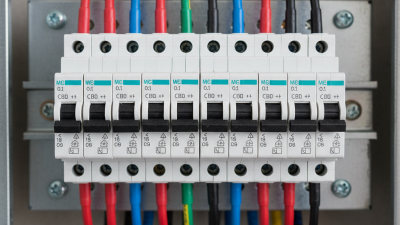
How to Choose a Miniature Circuit Breaker?
Choosing the right Miniatrue Circuit Breaker is more than matching a current number. It is a safety decision for cables, equipment, and people. A breaker that trips too easily can interrupt essential equipment. One that trips too slowly may leave wiring dangerously overheated.
Start with the circuit’s rated voltage, expected load, and conductor size. Then check the breaker’s rated current, number of poles, and breaking capacity. For example, a 16 A breaker may suit a lighting circuit, but the final choice depends on cable capacity and installation conditions. The label alone is not enough.
Small details matter. A residential distribution board may use a B-curve breaker for lighting or general outlets. Motors and transformers can require a C-curve type because they draw higher starting current. A D-curve device may be unsuitable unless the installation has been carefully assessed. The available fault current also matters, especially near industrial equipment. A 6 kA rating should not be assumed adequate everywhere.
Standards matter too. Look for relevant markings, manufacturer test data, and compliance with applicable requirements, such as IEC 60898-1 where appropriate. Product quality can vary, even when two breakers appear nearly identical. That is easy to overlook.
This guide explains the selection process in practical terms. It also highlights common mistakes, including oversizing a breaker to stop nuisance trips. That approach may hide an underlying fault. Always confirm the design with a qualified electrician and the local electrical rules. No checklist replaces proper testing. A careful choice protects the circuit and gives the breaker a clear job: disconnecting power before damage becomes serious.
Understanding the Role and Structure of a Miniature Circuit Breaker
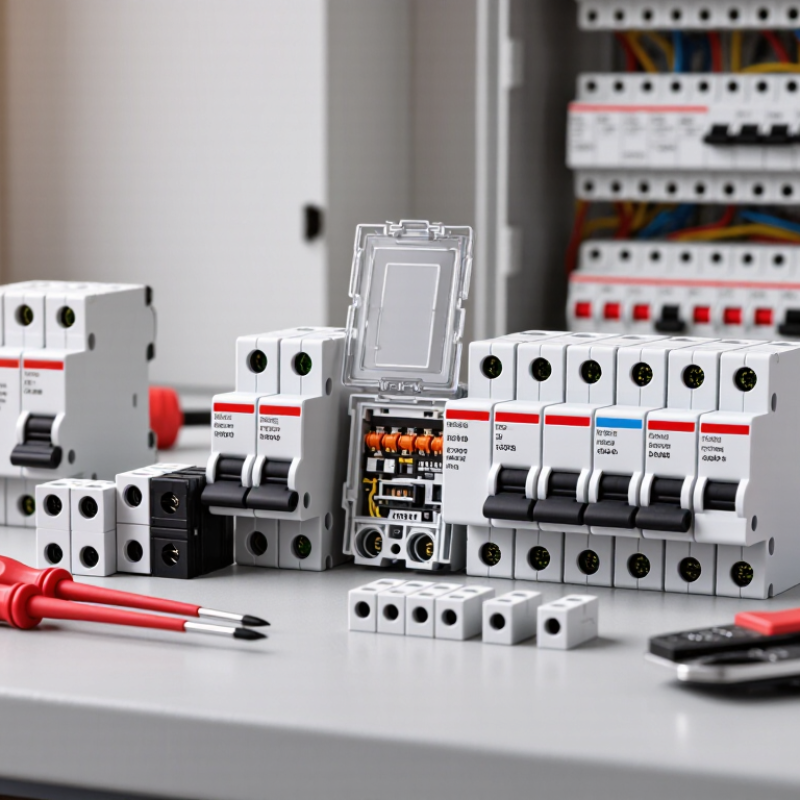
A miniature circuit breaker protects a low-voltage circuit from overloads and short circuits. Its structure is compact but carefully coordinated. The thermal element uses a bimetal strip that bends during sustained overcurrent. The magnetic element reacts almost instantly to a short circuit. Contacts then separate, while an arc chute divides and cools the electrical arc.
Small device. Serious duty.
The trip mechanism connects these parts to a manual handle and reset system. Terminals secure the conductor, but poor tightening can create heat and nuisance tripping. The International Energy Agency’s Electricity 2024 report recorded 2.2% global electricity-demand growth in 2023 and forecasts average annual growth of 3.3% from 2024 to 2026. More connected loads make correct protection increasingly important.
When choosing an MCB, match its rated current with the cable’s permitted capacity, not simply the appliance label. Select the pole configuration for the circuit arrangement. Check the operating curve, such as B, C, or D, against expected starting currents. Confirm the voltage and breaking capacity against the prospective short-circuit current. IEC 60898-1 provides a key reference for household and similar MCB applications. Field experience shows that a higher rating is not automatically safer. It may delay disconnection and overheat the cable. Installation conditions, ambient temperature, conductor length, and fault calculations still require careful review. Humans miss details. That is why verification matters.
Identifying the Electrical Requirements of Your Installation
Choosing a miniature circuit breaker starts with the installation, not the breaker cabinet. Record the system voltage, phase arrangement, continuous load, conductor size, and available fault current. A 230-volt single-phase circuit may need different protection from a three-phase motor circuit. Small details matter. Cable length also affects voltage drop and fault-loop impedance.
Calculate the design current from the actual equipment load. Include motors, compressors, LED drivers, and other devices with starting surges. The International Energy Agency’s Electricity 2024 report forecasts global electricity demand to grow by about 4% annually from 2024 to 2026. That growth makes accurate load assessment more important, especially in workshops and upgraded homes. The breaker’s rated current must not exceed the conductor’s permitted ampacity after temperature, grouping, and installation-method corrections. A common shortcut is matching the breaker to the appliance label alone. It can be wrong.
Check the prospective short-circuit current before selecting breaking capacity. IEC 60898-1 covers household and similar circuit breakers up to 125 A, with short-circuit capacities up to 25 kA under its stated conditions. Select the trip characteristic according to inrush behavior, not habit. Lighting and socket circuits often differ from motor circuits. Confirm the number of poles, neutral switching needs, enclosure conditions, and coordination with upstream protection. Residual-current protection is a separate requirement. I have seen installations where overcurrent protection was carefully chosen, but leakage protection was overlooked. That deserves a second check.
Selecting the Correct MCB Poles, Current Rating, and Curve
How to Choose a Miniature Circuit Breaker?
Selecting an MCB begins with its poles. A single-pole device usually protects one live conductor. Two-pole protection can disconnect live and neutral together, where local wiring rules require it. Three-phase circuits commonly use three poles, while four-pole devices may switch the neutral too. The choice depends on the earthing system, circuit arrangement, and applicable national code. Pole count is not a shortcut for safety.
Choose the current rating from the conductor’s permitted ampacity, installation method, ambient temperature, and expected load. IEC 60364-4-43 requires protection against overload conditions, so matching the MCB to the appliance alone is risky. A 20 A breaker on a cable rated for 16 A is a clear design error. I have seen this mistake in rushed panel upgrades. It looks tidy. It is not reliable.
The trip curve must match inrush current. IEC 60898-1 defines B curves at 3–5 times rated current, C curves at 5–10 times, and D curves at 10–20 times. B curves suit resistive lighting and general domestic loads. C curves often fit motors, transformers, and grouped electronic equipment. D curves need careful fault-current verification. A higher curve is not automatically better. Check the prospective short-circuit current, breaking capacity, cable length, and thermal conditions before selection. My own weak point is assuming a familiar curve will behave identically in every installation. It will not.
How to Choose a Miniature Circuit Breaker?
Selecting the Correct MCB Poles, Current Rating, and Curve
Poles
Use 1-pole for a single-phase live conductor, 2-pole to switch live and neutral, and 3- or 4-pole devices for three-phase systems where neutral isolation is required.
Current Rating
Select the rated current to protect the cable and equipment. Common ratings include 6 A, 10 A, 16 A, 20 A, 32 A, 40 A, 50 A, and 63 A.
Trip Curve
B curves trip magnetically at approximately 3–5 times rated current, C curves at 5–10 times, and D curves at 10–20 times.
The chart shows the instantaneous magnetic trip range as a multiple of the MCB rated current, based on the characteristic bands defined in IEC 60898-1. Final selection should also consider cable ampacity, prospective short-circuit current, and local electrical regulations.
Checking Breaking Capacity, Voltage, and Safety Standards
How to Choose a Miniature Circuit Breaker?
A miniature circuit breaker must interrupt a fault safely, not merely carry the normal load. Check the prospective short-circuit current at the installation point. Its breaking capacity, shown in kA, should meet or exceed that value. For example, a 6 kA breaker may suit a small residential panel, but only after fault-current verification. Cable length, transformer size, and supply conditions can change the result.
Voltage matters just as much. Select a breaker rated for the system voltage and the correct current type, such as AC or DC. A 230 V AC circuit needs suitable voltage compatibility, while a DC circuit may require different spacing and interruption performance. Review the applicable safety standard, such as IEC 60898-1 for many domestic applications or IEC 60947-2 for certain industrial systems. Certification markings help, but they do not replace technical checks or local electrical rules.
Tips:
Compare the breaker’s poles, voltage, kA rating, and standard marking with the panel design. Do not choose by amperage alone. A label can look reassuring. It is not the whole answer. Recheck the available fault current, especially after a supply upgrade. When the calculation is uncertain, ask a qualified electrician to verify the selection before installation. Mistakes here may remain invisible until a serious fault occurs.