Leave Your Message
-
Phone
-
E-mail
-
Whatsapp
-
Whatsapp

The global demand for safer low-voltage distribution is reshaping the search for reliable Rcbo Breaker manufacturers. The International Energy Agency’s Electricity 2024 report projects strong electricity-demand growth through 2025. More connected buildings, data rooms, workshops, and charging points require protection against overload, short circuits, and residual-current leakage. A small panel can carry serious responsibility.
Commercial market studies also indicate continued expansion in the global circuit-breaker industry. Fortune Business Insights and MarketsandMarkets report growth linked to construction, industrial automation, renewable-energy systems, and grid modernization. Their estimates differ because product definitions and regional data vary. That difference deserves attention.
This guide examines leading Rcbo Breaker manufacturers for international buyers. It considers certification, product range, rated current, breaking capacity, pole configuration, tripping characteristics, and supply consistency. Compliance with IEC 61009-1 is an important reference for residual-current circuit-breakers with overcurrent protection. However, certification alone does not prove dependable field performance. Buyers should review test reports, factory quality controls, warranty terms, and technical support.
Practical details matter. Can the manufacturer provide 30 mA protection for residential circuits? Are B-curve and C-curve options available? Does the supplier offer clear wiring diagrams and batch traceability? These questions often reveal more than polished brochures.
No ranking is perfect.
Manufacturers serve different markets, and pricing can hide differences in testing, materials, logistics, and after-sales service. This comparison therefore focuses on verifiable capabilities rather than popularity alone. It is intended to help distributors, contractors, and project engineers build a safer, more defensible purchasing decision. Some specifications still require direct confirmation before ordering.
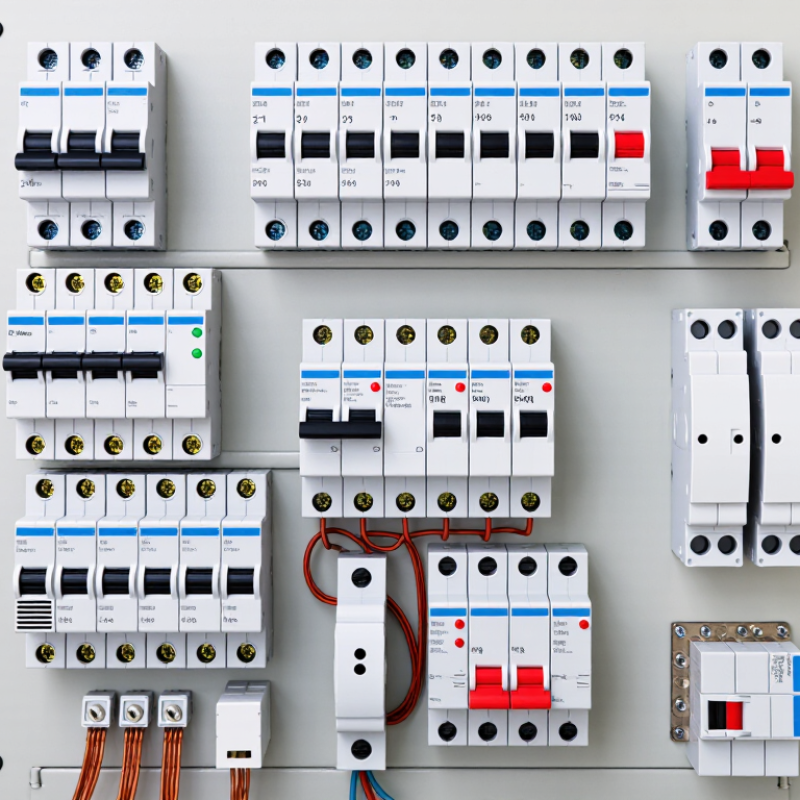
For global buyers, an RCBO should be judged by its protection details, not its appearance. It combines residual-current protection with overcurrent protection in one device. IEC 61009-1 covers RCBOs for household and similar applications. Compliance should be verified through test reports, certificates, and clear product markings. A 30 mA residual-current setting is commonly selected for additional protection against electric shock. It does not replace proper earthing, insulation, or regular testing. That distinction matters.
Key ratings need practical attention. Check the rated current, such as 16 A or 32 A, against the circuit cable and expected load. Confirm the rated voltage, number of poles, and short-circuit breaking capacity. A 6 kA rating may suit one installation, while a higher value may be required elsewhere. Trip curves also matter: B, C, and D curves respond differently to starting currents. Residual-current types, including AC and A, should match the equipment. A datasheet can look complete, yet omit regional installation conditions. I have seen selection errors caused by assuming identical standards mean identical applications.
Tips: Ask for the IEC 61009-1 edition, test basis, and full marking diagram. Verify 30 mA operation with an approved tester during commissioning. Check terminal size, ambient temperature, and tightening torque. Small details prevent field failures. Allow a qualified electrician to confirm coordination with upstream protection. Manufacturers may provide useful data, but independent verification remains necessary.
| Technical Category | Data Dimension | Standard or Typical Specification | Global Buyer Consideration |
|---|---|---|---|
| Product Definition | RCBO function | A residual current operated circuit-breaker with integral overcurrent protection. | One device provides earth-leakage protection and protection against overload and short circuit. |
| Primary Standard | IEC 61009-1 scope | Applies to RCBOs for household and similar uses, generally rated up to 440 V AC, up to 125 A, and with short-circuit capacity up to 25 kA, subject to the applicable edition and product design. | Confirm that the product marking, test report, and declaration of conformity reference the correct IEC or regional adoption, such as EN 61009-1. |
| Residual Current | Rated residual operating current, IΔn | 10 mA 30 mA 100 mA 300 mA | 30 mA is widely used for additional protection against electric shock. It does not replace basic insulation, earthing, or automatic disconnection requirements. |
| 30 mA Protection | Trip-current principle | The device trips when residual current reaches its rated residual operating current. For a 30 mA RCBO, the rated operating point is 30 mA. | Select the residual-current rating according to the installation design and local electrical code; avoid nuisance tripping caused by excessive cumulative leakage. |
| Residual-Current Type | Type AC | Detects residual sinusoidal alternating current. | Suitable only where the connected loads are known to produce sinusoidal AC residual current and local rules permit Type AC. |
| Residual-Current Type | Type A | Detects sinusoidal AC residual current and pulsating DC residual current. | Often preferred for modern electronic loads, including switched-mode power supplies, LED drivers, appliances, and single-phase inverters. |
| Residual-Current Type | Type F or Type B | Specialized types with enhanced detection characteristics; Type B can detect smooth DC residual current. Additional requirements are covered by IEC 62423 when applicable. | Consider these types for variable-speed drives, photovoltaic systems, electric-vehicle equipment, heat pumps, or other equipment that may generate mixed-frequency or smooth DC leakage. |
| Overcurrent Rating | Rated current, In | 6 A 10 A 16 A 20 A 25 A 32 A 40 A 50 A 63 A | Choose In according to conductor cross-section, installation method, ambient temperature, expected load, and coordination with upstream and downstream protection. |
| Tripping Curve | Instantaneous magnetic trip range |
Curve B: approximately 3–5 × In Curve C: approximately 5–10 × In Curve D: approximately 10–20 × In |
Curve B is common for low-inrush loads; Curve C suits moderate starting currents; Curve D is intended for high-inrush loads where the installation can withstand the required fault current. |
| Breaking Capacity | Rated short-circuit capacity, Icn | 4.5 kA 6 kA 10 kA 15 kA 25 kA | The selected Icn must be equal to or greater than the prospective short-circuit current at the installation point, unless a verified backup-protection arrangement applies. |
| Voltage Rating | Rated operational voltage, Ue | 230 V AC 240 V AC 400 V AC 415 V AC | Match the RCBO to the distribution system, number of poles, phase-to-neutral voltage, and local grid requirements. |
| Frequency | Rated frequency | 50 Hz 60 Hz | Check the marked frequency range, especially for export products intended for regions using different power-system frequencies. |
| Pole Configuration | Common arrangements | 1P+N 2P 3P+N 4P | Verify whether the neutral pole is switched and protected, the terminal arrangement, busbar compatibility, and the requirements of the target country's wiring system. |
| Trip-Time Performance | IEC non-delayed residual-current test points | At 0.5 × IΔn: no trip required. At 1 × IΔn: maximum trip time generally 300 ms. At 2 × IΔn: maximum 150 ms. At 5 × IΔn: maximum 40 ms, subject to the applicable product standard and device classification. | Use certified test data rather than marketing claims when evaluating shock-protection performance or coordination with other residual-current devices. |
| Time Delay | Instantaneous versus selective operation | General-purpose RCBOs are typically instantaneous. Selective or time-delayed residual-current devices require specific markings and coordination data. | Do not assume selectivity between upstream and downstream devices; check residual-current thresholds, delay characteristics, and manufacturer's coordination tables. |
| Installation | Mounting and terminals | Most modular RCBOs are designed for 35 mm DIN-rail mounting and use screw or cage-clamp terminals, but dimensions and terminal capacity vary. | Confirm DIN-rail compatibility, terminal cross-section range, tightening torque, busbar system, enclosure depth, and available wiring space. |
| Environmental Ratings | Operating conditions | Typical products specify an operating temperature range, altitude limit, pollution degree, humidity conditions, and storage requirements. | Review the exact datasheet for derating above the reference ambient temperature, high-altitude use, condensation risk, and outdoor or harsh-environment applications. |
| Compliance Evidence | Documents to request | Technical datasheet, IEC or regional test report, declaration of conformity, product marking details, wiring diagram, installation instructions, and quality-system evidence. | Ask for model-specific documentation. A generic certificate or a document covering a different current, pole configuration, or residual-current type may not validate the selected RCBO. |
| Application Matching | Typical circuit uses | Lighting circuits, socket outlets, residential final circuits, small commercial loads, appliances, and selected electronic equipment. | For motors, inverters, EV charging, solar systems, medical locations, or industrial equipment, confirm the required residual-current type, fault level, selectivity, and local regulations. |