How to Choose the Right Rcbo Breaker for Your Needs?
Choosing the right Rcbo Breaker is essential for electrical safety and efficiency. According to John Stevens, an industry expert with over 20 years of experience, "Selecting an Rcbo Breaker is about understanding your specific needs." His insight highlights the importance of a tailored approach.
When selecting an Rcbo Breaker, consider your electrical system's requirements. This includes the load size, type of appliances, and potential hazards. Many people overlook these factors, leading to improper choices. A poorly chosen Rcbo can result in frequent trips or inadequate protection against faults.
Understanding your requirements is crucial. It's vital to assess both your current and future electrical needs. Power requirements may change over time, yet many ignore this aspect. Careful analysis can prevent unfortunate incidents caused by outdated or insufficient breakers. Equip yourself with knowledge to make informed decisions.
Understanding the Basics of RCBO Breakers
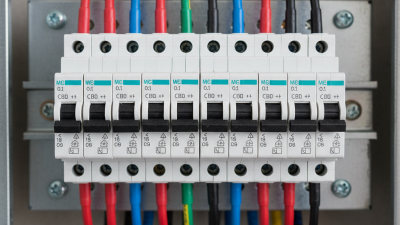
RCBO breakers combine the features of circuit breakers and residual current devices. Understanding them is crucial for proper electrical safety. They protect against overloads, short circuits, and earth faults. An RCBO disconnects the circuit when it detects an imbalance in the electrical current. This design minimizes the risk of electric shock and fire hazards.
When choosing an RCBO, consider the load requirements. You need to know the current rating suitable for your application. Incorrect ratings can lead to nuisance tripping or, worse, failure to trip under fault conditions. Review your electrical plans to identify these details carefully. Consulting a professional can be beneficial, especially for complex installations.
Another factor to think about is the sensitivity rating. It measures how quickly the device responds to ground faults. A lower mA rating means faster disconnection. However, overly sensitive breakers can trip frequently, causing frustration. Striking a balance is necessary. Familiarity with local regulations can also guide your choice. Ensure you select an RCBO that complies with your region's safety standards. This knowledge will strengthen your selection process and enhance your electrical safety.
Identifying Your Electrical Load Requirements
Choosing the right RCBO breaker starts with understanding your electrical load requirements. Knowing how much electricity your appliances and systems consume is crucial. This understanding helps you select a breaker that protects against overloads and faults. For example, a typical household may need a 32A RCBO for heavy appliances like washing machines or electric ovens.
Here are some tips for identifying your electrical load needs. Calculate the total wattage of all devices on a circuit. Add up the wattages for lighting, heating, and appliances. It’s important to leave some buffer. This prevents the breaker from tripping during peaks in usage. Also, pay attention to the starting current of motors. This can be significantly higher than their running current.
Consider using energy monitoring tools. These tools can provide real-time data on consumption and help in understanding patterns in electricity use. Be aware that loads can change over time. Regularly reassess your electrical needs to ensure safety and efficiency. An undersized breaker can lead to nuisance tripping, while an oversized one may not provide adequate protection. Look for a balance that suits your lifestyle and safety requirements.
Evaluating Sensitivity Ratings for Different Applications
When selecting an RCBO (Residual Current Circuit Breaker with Overcurrent protection), sensitivity ratings are vital. These ratings indicate how quickly the breaker reacts to faults. Different applications require different sensitivities. For example, residential settings often use 30mA ratings to protect against shock. In contrast, electrical circuits in medical facilities may require more sensitivity, such as 10mA, for enhanced safety.
**Tips:** Always consult with a qualified electrician. They can help determine the best sensitivity for your specific needs. Consider the environment too. Wet or humid areas need higher sensitivity ratings to ensure safety.
Understanding the variations in sensitivity can prevent mishaps. If a 30mA breaker trips too frequently in your setting, it may not be suitable. Analyzing the loading and potential fault conditions is crucial. Using the wrong rating can lead to unnecessary downtime or hazards. Do not overlook the unique requirements of your applications. Sensitivity should match the risk levels present in your environment.
Assessing Circuit Breaker Size and Compatibility
Choosing the right RCBO breaker involves understanding the size and compatibility of your circuit breaker. There are various factors to assess, including load demand and installation environment. Knowing your requirements can help ensure safety and efficiency.
It’s essential to calculate the total current needed for your circuit. Check the appliances or devices connected to it. For example, if you run multiple high-power devices, you need a
breaker that can handle that load without tripping. This requires attention to detail.
Tip: Always consider future expansion. If you anticipate adding more devices, overestimate your needs now. You don’t want to replace the breaker soon after installation.
Compatibility is equally crucial. Match the breaker type with your electrical panel. Incompatible breakers can lead to malfunction or fire hazards. Verify the installation manual for your panel specifications. Failure to do so can result in serious issues down the line.
Tip: Consult with a qualified electrician if you are unsure. Professional advice can prevent costly mistakes. A small oversight in choosing the right breaker might lead to significant repercussions. Make informed choices.
Considering Additional Features and Installation Needs
Choosing the right RCBO breaker involves understanding your specific needs, especially regarding additional features and installation requirements. Many users overlook the importance of selecting features that enhance safety and convenience. For instance, a report by the National Electrical Manufacturers Association highlights that circuit breakers equipped with surge protection can reduce equipment damage by up to 50%. This feature is vital in areas prone to voltage spikes.
Installation needs also play a crucial role in your decision-making process. A proper assessment of your electrical setup is essential. Data from the Electrical Safety Foundation International indicates that incorrect installation of breakers can lead to hazards like electrical fires. Therefore, consider whether the breaker aligns with your existing systems and whether it requires special tools or expertise for installation.
While many products boast advanced technologies, not every feature will benefit your specific setup. Reflect on what is truly necessary based on your electrical demands. Evaluating features not only enhances functionality but also ensures adherence to safety standards. Understanding these nuances can be a complicated task, but it is critical for effective installation and long-term reliability.
How to Choose the Right Rcbo Breaker for Your Needs?
| Feature |
Description |
Importance |
Installation Needs |
| Current Rating |
The maximum load current the breaker can handle. |
Crucial |
Must match your electrical load requirements. |
| Earth Fault Protection |
Detects earth faults and disconnection of supply. |
Essential |
Requires proper grounding for effective operation. |
| Surge Protection |
Protects against voltage spikes from external sources. |
Recommended |
Additional wiring may be needed. |
| Compact Design |
Smaller size for easier installation in tight spaces. |
Useful |
Easier to integrate into existing panels. |
| LED Indicators |
Visual indication of status and diagnostics. |
Convenient |
No special installation required. |