How to Choose the Best Mcb Parts for Your Electrical Projects?
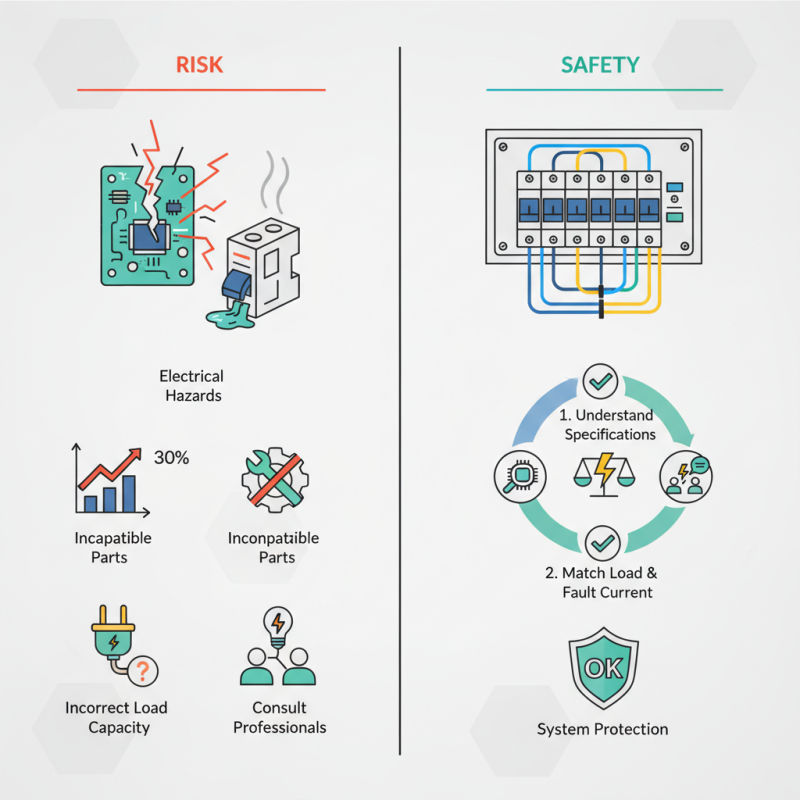
Choosing the best MCB parts is crucial for any electrical project. Proper selection can mean the difference between safety and risk. According to a report by the International Electrotechnical Commission, inappropriate circuit breaker choices lead to 30% of electrical hazards.
Expert in electrical components, David M. Tran, emphasizes, “Choosing the right MCB parts is not just about compatibility; it impacts overall system safety.” His insights highlight the importance of understanding specifications. Without this understanding, one might overlook critical details.
Additionally, considerations such as load capacity and fault current ratings are essential. Failing to account for these can result in failures, risking both equipment and safety. Seeking advice from professionals and investing time in research can prevent these mistakes.
Understanding MCB Parts: Key Components Explained
When selecting MCB parts, it's crucial to understand the key components. The main parts include the actuator, the snap-action mechanism, and the current limiting features. Each component plays a vital role in ensuring safety and efficiency. The actuator helps in manually resetting the circuit breaker after a trip. It should feel sturdy and respond correctly to pressure.
Next is the snap-action mechanism, which is responsible for rapid disconnection during overloads. This mechanism should trigger promptly to prevent damage. Pay attention to the design and material of this component. Strong materials contribute to durability. Additionally, current limiting features help minimize short circuit damages. Not all MCBs have this; it's essential to check specifications.
As you assess these components, reflect on your project's specific needs. Will you face frequent short circuits? Consider MCBs with advanced features. Understanding these details can improve your project's safety. An informed choice can lead to better performance.
Identifying Your Project's Electrical Load Requirements
When embarking on an electrical project, understanding your load requirements is crucial. Start by calculating the total wattage of all devices you plan to connect. For instance, if you have lights, outlets, and appliances, add their wattages together. This total gives you a clear idea of the power demands on your system. If you overlook this step, you may end up with inadequate protection or circuit failures.
Consider diversifying your electrical load. A mix of lighting, heating, and cooling equipment will affect your choice of Miniature Circuit Breakers (MCBs). An MCB needs to match the load characteristics. For example, resistive loads like heaters require different MCB ratings than inductive loads, such as motors. Ensure that your MCB can handle both the surge currents during startup and the continuous load.
Also, reflect on the safety margins in your calculations. It's tempting to stick precisely to load requirements, but it might be safer to leave some buffer. Overloading protections can lead to frequent trips, which is inconvenient and may signal an underlying issue. Regular load checks and adjustments will keep your electrical system running smoothly and safely.
Selecting the Right MCB Type for Your Applications
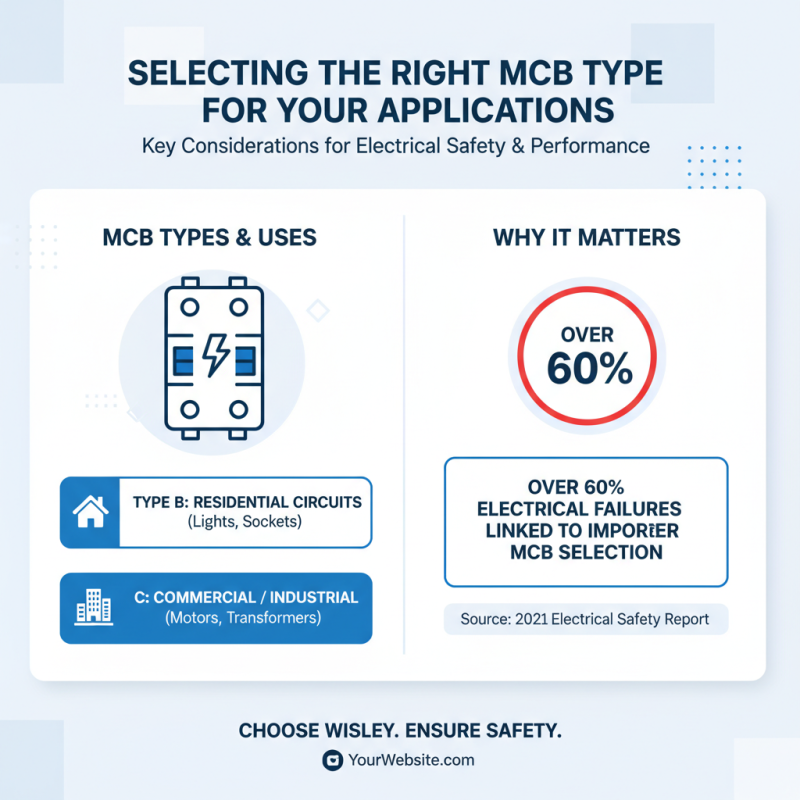
When selecting the right MCB (Miniature Circuit Breaker) type for your electrical applications, it's crucial to consider specific requirements. Different MCB types serve unique functions, such as Type B for residential circuits and Type C for commercial uses. According to the 2021 Electrical Safety Report, over 60% of electrical failures were linked to improper MCB selection.
Understanding the load characteristics of your application is essential. If you’re working with inductive loads, Type D MCBs may be appropriate due to their higher short-circuit protection. Reports suggest they can withstand currents of up to ten times the rated current for a brief period, thus preventing nuisance tripping. However, they aren't suitable for all environments, especially where sensitive equipment is involved.
Furthermore, the installation environment impacts MCB selection. For instance, outdoor setups might require MCBs with protective enclosures. Approximately 30% of installations may lack adequate shielding, increasing the risk of malfunction. Investing in robust, reliable MCBs can prevent costly downtime. Misguided assumptions about MCB ratings often lead to project complications, reminding us that a thoughtful selection process is vital for safety and efficiency.
Evaluating Ratings and Specifications for MCB Parts
When selecting MCB parts, evaluating ratings and specifications is crucial. Each MCB, or Miniature Circuit Breaker, has specific characteristics that define its performance. Start by examining the current rating. This indicates the maximum load the MCB can handle without tripping. Choosing an MCB with the right amperage ensures safety and reliability in your electrical project.
Next, consider the breaking capacity. This tells you how much fault current the MCB can interrupt without failing. Low breaking capacity can lead to failures in high-demand scenarios. Always verify the MCB's characteristics against your project's requirements. A mismatch can lead to serious issues or even accidents.
Lastly, pay attention to the tripping curve. It details how quickly the MCB reacts under different conditions. Different curves, A, B, C, and D, suit various applications. Understanding these can be complex but is essential for effective installation. Take your time to analyze each aspect thoroughly. This will enhance your project's safety and efficiency. Balancing these details with practical experience can be tricky, but it's necessary for optimal performance.
How to Choose the Best MCB Parts for Your Electrical Projects?
| MCB Type |
Current Rating (A) |
Voltage Rating (V) |
Breaking Capacity (kA) |
Pole Configuration |
Application |
| Type B |
6 |
230 |
3 |
Single Pole |
Lighting Circuits |
| Type C |
10 |
400 |
6 |
Double Pole |
Motors & Transformers |
| Type D |
32 |
230 |
10 |
Three Pole |
Heavy Machinery |
| Type K |
16 |
400 |
4.5 |
Single Pole + Neutral |
Mixed Loads |
Ensuring Compatibility with Your Existing Electrical Systems
When selecting Miniature Circuit Breakers (MCBs) for your electrical projects, compatibility is key. You should assess the specifications of your current electrical systems first. Look for voltage ratings, current capacities, and the number of poles. These factors directly affect how MCBs fit into your existing framework. A mismatch can lead to system failures or safety issues.
Don't overlook the design of your project. Ensure that your chosen MCB integrates well with other components. For instance, check whether it can be installed in your distribution board without any modifications. Sometimes, adjustments may be necessary. Evaluate whether those adjustments align with your project goals. This balance between compatibility and efficiency is crucial for a reliable system.
Remember that not all MCBs are created equal. Some may promise high performance but fall short in real-world applications. It's vital to read reviews or consult industry professionals. Collecting feedback from actual users provides insights that specifications alone may not reveal. Each project is unique, so take the time to analyze how different MCBs might perform in your specific context.
Understanding MCB Parts Compatibility
This bar chart illustrates the compatibility percentage of various MCB types with existing electrical systems. It's essential to consider these compatibility levels when selecting MCB parts for your projects to ensure optimal performance and safety.