Leave Your Message

How to Choose the Right ACB Arc Chute for Global Sourcing?

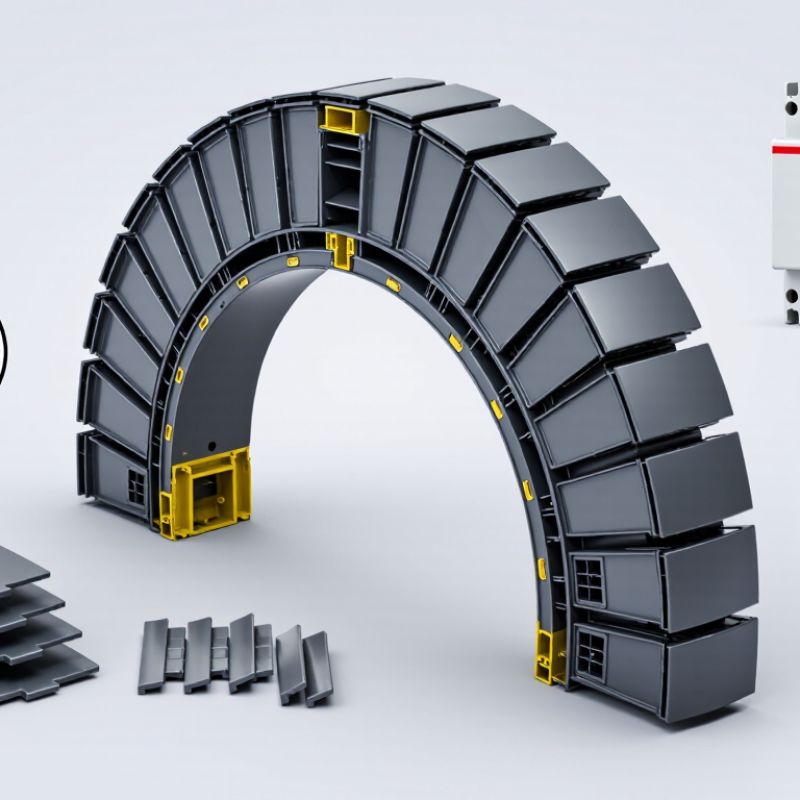
Choosing the right Acb Arc Chute for global sourcing is not a simple catalogue exercise. It requires practical judgement, technical knowledge, and disciplined supplier verification. An arc chute may look like a stack of molded plates, yet each plate controls heat, pressure, and electrical arc movement inside an air circuit breaker. Small design differences can affect interruption performance, service life, and maintenance costs.

Dr. Elena Maric, an electrical protection specialist, describes the selection principle clearly: “An arc chute must control the arc reliably, not merely fit the breaker.” Her observation matters when comparing suppliers across different manufacturing regions. Buyers should examine the breaker frame size, rated current, short-circuit capacity, insulation system, plate material, spacing, and ventilation design. They should also request dimensional drawings, test evidence, batch records, and sample inspections before approving volume production. Trust needs evidence.

Field experience often reveals details that catalogues omit. A chute can fit perfectly but still perform poorly under repeated fault conditions. Warped plates, weak barriers, rough edges, or inconsistent assembly may remain invisible during a basic visual check. This is where sourcing decisions become difficult. A lower price may hide higher rejection rates and longer downtime. Sometimes, the cheapest option is not economical. That deserves reflection.

Global sourcing also requires careful communication. Confirm technical terminology, packaging strength, traceability, replacement compatibility, and delivery capability. Do not rely on photographs alone. A dependable Acb Arc Chute supplier should explain its design choices and accept reasonable verification. The right component is not simply available. It is measurable, compatible, repeatable, and proven under demanding operating conditions.
How to Choose the Right ACB Arc Chute for Global Sourcing?

Define the Role and Function of an ACB Arc Chute

How to Choose the Right ACB Arc Chute for Global Sourcing?

An ACB arc chute is not a decorative cover. It controls the arc created when contacts separate under fault conditions. Its splitter plates divide, cool, and lengthen the arc. The arc then loses energy and extinguishes inside a controlled chamber. This protects contacts, insulation, and nearby conductors from excessive heat. The function is simple to describe. The engineering is not.

IEC 60947-2 requires low-voltage circuit breakers to demonstrate defined breaking and short-circuit performance. However, the arc chute must match the breaker’s contact system, rated voltage, interrupting capacity, and internal geometry. A replacement that fits the cabinet may still fail during testing. A neat drawing is not proof.

The IEA Electricity 2024 report expects global electricity demand to grow by an average of 3.3% annually from 2024 to 2026.

More energized infrastructure increases the need for reliable interruption and maintainable switchgear. During sourcing, request material specifications, plate spacing, insulation data, temperature-rise results, and verified short-circuit test records.

Check the chute after repeated operations. Look for warped plates, loose separators, and heavy carbon deposits. These details reveal thermal stress better than photographs.

Some teams focus too heavily on price. That is understandable, but incomplete. Arc-chute performance depends on the complete ACB assembly, not one isolated component.

Reference: IEC 60947-2; IEA, Electricity 2024.
Match Arc Chute Ratings with System Voltage and Current

Choosing the right ACB arc chute begins with matching its rating to the system voltage and current. An arc chute designed for 415 V may not perform safely in a 690 V installation. Higher voltage can create longer, more persistent arcs during interruption. Check the chute’s rated operational voltage, insulation level, and tested interruption conditions.

Current matters just as much. Compare the ACB’s continuous current rating with the expected load, not only the normal operating value. A factory may experience motor starting surges, transformer inrush, or short-circuit currents. The arc chute must support the breaker’s interrupting capacity under these conditions. Leave practical margin.

Small details often decide sourcing results. Confirm pole configuration, mounting dimensions, exhaust direction, and compatibility with the breaker’s contact system. Temperature and altitude can also affect performance. A component tested at sea level may need derating at high elevations. Ask suppliers for test reports, dimensional drawings, material data, and inspection records. Do not rely on photographs alone.

I once treated voltage matching as the main checkpoint. That was too simple. A correct voltage rating cannot compensate for poor current coordination or incorrect dimensions. Global sourcing also requires checking applicable technical standards and local installation requirements. Samples should be inspected before approving bulk production. Measure them. Record everything.

Evaluate Materials, Design Features, and Arc Control Performance

How to Choose the Right ACB Arc Chute for Global Sourcing?

Selecting an ACB arc chute requires more than comparing dimensions and prices. Start with the material system. Arc splitter plates should resist heat, erosion, and magnetic forces during fault interruption. Insulating side walls need stable dielectric performance after repeated thermal stress. In field inspections, I have seen low-cost materials develop cracks near mounting points. That small defect can reduce insulation clearance. Check plate thickness, coating quality, and ventilation paths against the breaker’s tested specifications. Also confirm resistance to humidity, dust, and transport vibration.

Tips: Request material certificates, dimensional drawings, and interruption test records. Compare samples after thermal cycling, not only before installation. Ask suppliers how they control batch consistency. A neat sample proves little.

Design features directly influence arc control performance. Look for correctly aligned splitter plates, secure rivets, adequate exhaust channels, and precise positioning within the breaker frame. These details divide, cool, and lengthen the arc efficiently.

The chute must also support fast dielectric recovery after current interruption. Verify its rated current, short-circuit capacity, operating voltage, and compatible contact geometry.

I once assumed a visually identical chute would perform the same. It did not. Small changes in plate spacing altered arc movement during testing. For global sourcing, require traceable inspection records and independent verification when risk is high. Recheck everything.

Check Compatibility with ACB Models and Installation Requirements

How to Choose the Right ACB Arc Chute for Global Sourcing?

Compatibility with the ACB model should guide every arc chute decision. Confirm the breaker frame size, rated current, voltage, interrupting capacity, and pole arrangement. Do not rely on appearance alone. Two arc chutes may look similar but use different fixing points or internal plates. Check the original drawing, service manual, and identification label before requesting quotations. I have seen sourcing projects delayed because one mounting hole was several millimeters away.

Installation requirements deserve equal attention. Measure the chute length, width, height, and connection position. Then check the available clearance inside the panel. The exhaust direction must match the enclosure design and ventilation path. Confirm insulation distances, screw locations, retaining clips, and the required tightening method. A small mismatch can create vibration, overheating, or difficult maintenance. Test fitting is strongly recommended.

Ask suppliers for dimensional drawings, material details, temperature limits, and inspection records. The arc chute should suit the ACB’s operating environment, including dust, humidity, and switching frequency. Verify whether replacement parts require adjustments to barriers or interlocks. A careful comparison table helps prevent assumptions. Still, paperwork is not enough. Physical inspection may reveal rough edges, weak separators, or poor alignment. My own checks are not perfect, so a second technical review can catch what one person misses.

Compare Global Suppliers, Standards, Costs, and Delivery Terms

Choosing the right ACB arc chute for global sourcing requires more than comparing catalog prices. Start with suppliers that can provide dimensional drawings, material data, and recent test documentation. Check whether the arc chute matches the ACB’s rated current, short-circuit capacity, insulation level, and mounting structure. IEC 60947-2 may guide the evaluation, while regional requirements can add testing or marking needs.

Ask each supplier to explain its production controls. Look for traceability, incoming material checks, and inspection records for every batch. A capable supplier should discuss heat-resistant insulating materials, vent design, and contact clearance with practical detail. Vague answers are warning signs. Request samples before approving volume production. Fit matters.

The lowest unit price is rarely the true cost. Add tooling, sample charges, packaging, freight, customs, taxes, and possible rework. Compare Incoterms carefully, because responsibility changes between factory pickup and delivered arrival. Delivery promises also need evidence. Ask about production capacity, buffer stock, shipping routes, and recovery plans for delayed components. A two-week lead time may exclude testing and export handling. That can distort the schedule.

I prefer a simple comparison table with compliance, quality risk, landed cost, and delivery reliability. It is not perfect. Supplier data may be incomplete, and forecasts can change quickly. Still, documented assumptions make negotiation more honest and easier to review.

How to Choose the Right ACB Arc Chute for Global Sourcing? - Compare Global Suppliers, Standards, Costs, and Delivery Terms
The figures below are practical market benchmarks for low-voltage ACB arc chutes and arc-chute assemblies. Actual pricing, performance, certification, and lead time depend on the ACB frame, fault rating, pole configuration, drawings, test requirements, order quantity, and destination country.
Generic Supplier Profile Typical Manufacturing Region Common ACB Application Typical Electrical Range Construction and Materials Relevant Standards and Documents Indicative Unit Cost
(USD, Ex Works)
Typical MOQ Typical Production Lead Time Common Delivery Terms Quality and Sourcing Considerations
Cost-focused component manufacturer East and Southeast Asia Replacement arc chutes for standard low-voltage air circuit breakers 400–1,600 A
Up to approximately 65 kA, subject to design verification
Stacked deion plates, galvanized or coated steel side frames, molded insulating supports, stainless or plated hardware IEC 60947-1 and IEC 60947-2 where applicable;
dimensional drawings, material declarations, routine inspection report
$35–$180
Depending on frame size and plate design
10–50 sets 3–6 weeks after drawing approval EXW, FOB, FCA; sea or air freight arranged separately Competitive pricing and flexible customization. Require first-article inspection, plate spacing checks, insulation verification, and a confirmed interchangeability drawing.
Mid-volume export manufacturer China, India, Vietnam, and other established export markets OEM-compatible replacement parts and private-label industrial distribution 800–3,200 A
Commonly 50–85 kA, depending on the complete ACB design
Heat-resistant arc splitter plates, reinforced insulating barriers, powder-coated or plated metal enclosure components IEC 60947-2 test references;
ISO 9001 quality system commonly available;
RoHS or REACH declarations when requested
$80–$450
Custom tooling may be charged separately
20–100 sets 4–8 weeks, including tooling or sample approval when required FCA, FOB, CIF, CIP, or DAP by quotation Usually the best balance of cost, customization, and export capability. Confirm packaging, corrosion protection, spare-part availability, and the validity of test evidence.
High-spec industrial supplier Europe, Japan, South Korea, and other mature industrial markets Critical infrastructure, high-utilization switchboards, and engineered replacement programs 1,600–6,300 A
Up to approximately 100 kA only when validated as part of the complete breaker assembly
Precision-formed deion plates, high-temperature insulation, robust arc runners, controlled clearances, and corrosion-resistant hardware IEC 60947-1 and IEC 60947-2;
type-test or design-verification evidence;
traceability records and documented change control
$180–$1,000+
Engineering and validation costs may apply
1–20 sets 6–12 weeks EXW, FCA, CPT, CIP, or DDP subject to tax and import arrangements Higher documentation quality and tighter dimensional control. Suitable when downtime, safety risk, and field replacement compatibility are more important than the lowest purchase price.
Regional aftermarket assembler North America, Europe, Middle East, and local service markets Emergency replacement, refurbishment, and maintenance stock 400–3,200 A
Application-specific; interrupting capacity must be checked against the original breaker design
Replacement plate packs, refurbished frames, replacement insulators, and locally assembled hardware kits Applicable IEC or UL requirements based on installation jurisdiction;
product identification, inspection record, and installation instructions
$150–$900
Often includes local handling or assembly
1–10 sets 1–4 weeks for stocked or semi-stocked items FCA, DAP, or local delivered terms; expedited courier often available Fast response and low MOQ are advantages. Verify whether the item is new, refurbished, or reconstructed, and request photographs, serial traceability, and a clear warranty scope.
Engineering-led custom manufacturer Any region with dedicated electrical design and testing capability Obsolete ACBs, non-standard frame sizes, retrofit projects, and special environmental conditions Application-defined
Voltage, current, frequency, short-circuit rating, and duty cycle must be specified
Custom plate geometry, modified arc runners, high-temperature insulation, special coatings, and project-specific mounting hardware IEC 60947-2 design verification;
customer-approved drawings;
material certificates, dimensional report, and project test plan
$500–$2,500+
Engineering, tooling, and testing can be additional
1–5 prototype sets; production MOQ by project 8–16 weeks for prototypes; longer for validation programs FCA, CPT, CIP, DAP, or project-specific logistics terms Best for difficult applications rather than routine replacement. Establish ownership of drawings, approval gates, testing responsibilities, and spare-part continuity before placing the order.
Selection rule: Match the arc chute to the complete ACB’s rated operational voltage, rated current, short-circuit breaking capacity, pole arrangement, mounting dimensions, arc-runner position, insulation clearances, and thermal duty. IEC 60947-2 or UL requirements apply to the complete switching device and should not be assumed solely from an arc-chute component.