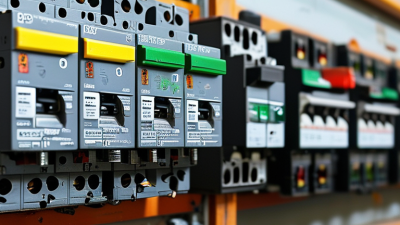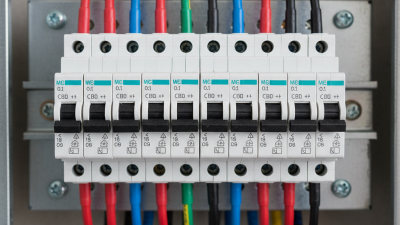
Choosing a reliable MCB supplier requires more than comparing prices or browsing polished product catalogs. For global buyers, MCB Electrical products must perform safely inside residential panels, commercial switchboards, and demanding industrial systems. A dependable supplier should explain trip curves, rated current, breaking capacity, pole configuration, and applicable standards clearly. Small details matter. A loose terminal or unclear label can create serious installation problems.
This 2026 guide reviews leading MCB Electrical suppliers through practical purchasing criteria. These include manufacturing experience, quality control, product testing, certification management, export capability, and after-sales support. Buyers should look for evidence linked to IEC 60898-1 or IEC 60947-2 requirements, depending on the application. Factory audits, sample testing, batch inspection reports, and traceable serial information can reveal more than marketing language. Packaging also deserves attention. Moisture-resistant cartons and clear model markings protect products during long international shipments.
No supplier is perfect. Some companies offer excellent pricing but limited technical support. Others provide strong documentation yet struggle with flexible delivery schedules. That difference matters when projects involve mixed ratings, B-curve and C-curve breakers, or urgent replacement orders. This overview aims to support careful decisions, not promote one universal winner. Buyers should verify certificates, test reports, warranty terms, and local compliance before signing contracts. Check the details. Ask better questions. Reliability is built through evidence, consistent communication, and performance that remains stable after the shipment arrives.
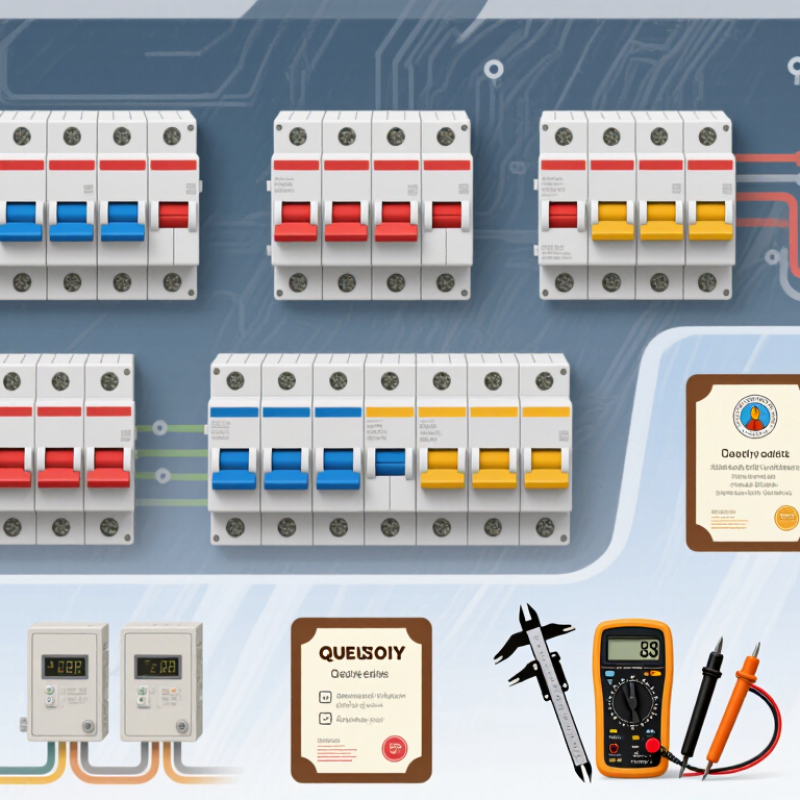
Miniature circuit breakers, or MCBs, protect low-voltage circuits from overloads and short circuits. When current rises too far, the breaker disconnects the circuit before wires overheat. Thermal protection responds to sustained overloads. Magnetic protection reacts quickly to short circuits.
For global buyers, selecting an MCB is more than comparing prices. A suitable unit must match the system voltage, rated current, pole configuration, trip curve, and short-circuit capacity. For example, a workshop circuit may need different protection from a lighting circuit. Check test reports, calibration records, and compliance with relevant standards, such as IEC 60898-1 or IEC 60947-2. Local requirements still matter.
Reliable suppliers provide traceable production batches and clear technical documents. They should explain contact materials, operating temperature, terminal size, and mechanical endurance. Ask for sample testing before placing a large order. Inspect label accuracy, terminal strength, and trip performance. Small details matter.
A supplier audit can reveal more than a polished catalog. Review factory quality procedures, incoming material checks, and final inspection records. Confirm realistic lead times and replacement support. Some quotations look attractive but exclude testing, packaging, or certification costs. That creates trouble later. One weak point remains common: buyers often trust documents without checking the actual product. Photographs, independent testing, and controlled samples can expose that gap before installation.

For global buyers, evaluating MCB electrical suppliers in 2026 requires more than comparing unit prices. The International Energy Agency’s Electricity 2024 report forecasts global electricity demand to grow by an average of 3.2% annually through 2026. Rising demand increases pressure on suppliers to deliver consistent protection, documentation, and capacity.
Start with technical compliance. Confirm test reports against IEC 60898-1 or IEC 60947-2, depending on the application. Check rated current, breaking capacity, trip curves, temperature performance, and endurance results. Ask for traceable batch records, not only polished certificates. An independent laboratory should verify critical claims. The World Bank’s Logistics Performance Index highlights customs quality, infrastructure, and delivery reliability as key supply-chain factors. These details matter when projects span several ports.
Inspect manufacturing evidence through virtual audits or site visits. Review calibration records, incoming-material controls, and final inspection procedures. Request samples from different production batches. A low unit price still looks attractive. It can also be a trap. Evaluate lead times, minimum order quantities, packaging strength, and spare-part support. Supplier communication deserves measurement, too: response time, corrective-action speed, and clarity during a failed test. No checklist catches everything. Buyers should record unresolved concerns and revisit them before signing long-term contracts. This approach is less convenient, but usually more dependable.
| Evaluation Factor | Measurable Dimension | Relevant 2026 Benchmark or Requirement | Evidence Buyers Should Request | Suggested Weight |
|---|---|---|---|---|
| Product Standard Compliance | Applicable product standard | IEC 60898-1 for household and similar AC circuit-breakers; IEC 60947-2 for industrial circuit-breaker applications where applicable. | Current edition test reports, declarations of conformity, and certificate scope matching the exact product series. | 15% |
| Rated Voltage Coverage | Ue rating and network compatibility | Common IEC 60898-1 MCB applications include AC systems up to 440 V, subject to the product’s declared rating and pole configuration. | Technical datasheet showing voltage, frequency, pole arrangement, and utilization conditions. | 8% |
| Rated Current Range | Available In values | IEC 60898-1 covers rated currents up to 125 A; the selected current rating must match cable ampacity, load demand, and installation conditions. | Published current-rating schedule and coordination guidance for each frame size. | 8% |
| Short-Circuit Breaking Capacity | Icn or Icu rating | IEC 60898-1 MCBs may be rated up to 25 kA. The selected breaking capacity must be equal to or greater than the prospective fault current at the installation point. | Laboratory test report, marked rating on the device, and fault-level application data. | 15% |
| Tripping Characteristics | B, C, or D instantaneous trip curve | For IEC 60898-1: B curve operates at approximately 3–5 × In, C curve at 5–10 × In, and D curve at 10–20 × In. | Time-current curves and application guidance for resistive, inductive, motor, and transformer loads. | 10% |
| Pole Configuration | 1P, 1P+N, 2P, 3P, and 4P options | The pole arrangement must correspond to the earthing system, neutral-switching requirements, and local installation rules. | Dimensional drawings, neutral-pole details, terminal diagrams, and wiring instructions. | 6% |
| Thermal and Electrical Endurance | Operating-cycle performance | Verify endurance results against the applicable IEC standard and the declared product category; do not compare cycle figures without checking the test method. | Type-test reports identifying test sequence, current rating, voltage, power factor, and acceptance criteria. | 8% |
| Temperature Performance | Reference temperature and derating | The declared current rating is temperature-dependent. Buyers should obtain correction factors for ambient temperatures, enclosure installation, and multi-pole grouping. | Derating tables, calibration temperature, heat-rise data, and enclosure installation instructions. | 8% |
| Mechanical Compatibility | DIN-rail fit, dimensions, terminals, and accessories | Confirm 35 mm DIN-rail compatibility where required, terminal capacity, tightening torque, busbar compatibility, and accessory interfaces. | CAD drawings, installation manual, terminal specifications, and accessory compatibility matrix. | 6% |
| Quality Management | Manufacturing process control | An independently certified quality-management system, such as ISO 9001, should cover the relevant manufacturing site and product scope. | Valid certificate, audit date, factory address, inspection plan, and batch traceability procedure. | 8% |
| Supply Capability | Lead time, MOQ, and production capacity | Evaluate quoted lead time against project schedules, with separate checks for standard products, customized labeling, and new tooling. | Capacity statement, historical delivery performance, minimum-order quantities, and continuity plan. | 6% |
| Traceability and Anti-Counterfeit Controls | Serial, batch, date, and verification systems | Each shipment should be traceable to a production batch, inspection record, and applicable technical documentation. | Batch coding format, inspection certificates, secure packaging features, and verification process. | 5% |
| Technical Support and Warranty | Response time, warranty terms, and documentation | Assess documented warranty duration, replacement procedure, fault-analysis support, and availability of multilingual technical files. | Warranty policy, service-level targets, troubleshooting guide, and technical contact process. | 5% |
| Total Evaluation Weight | 100% | |||
Note: Technical ratings must be verified against the exact product model, applicable national regulations, installation environment, and the latest edition of the relevant standard before procurement.
Global buyers need more than a low MCB quotation. They need suppliers with repeatable testing, clear documentation, and stable production. The International Energy Agency reported that renewable capacity additions reached about 510 GW in 2023, creating greater demand for dependable low-voltage protection. Supplier profiles should therefore show experience with residential, commercial, industrial, and renewable installations.
Strong suppliers typically offer one-, two-, three-, and four-pole MCBs, with current ratings from small domestic loads to higher industrial circuits. Their product portfolios should include B, C, and D trip curves, suitable breaking capacities, auxiliary contacts, shunt releases, and distribution-board accessories. Compliance with IEC 60898-1 or IEC 60947-2 matters, but certificates alone are not enough. Buyers should request type-test reports, batch records, calibration evidence, and samples from current production.
Industry reports often forecast steady MCB market growth, although exact figures vary by research company and region. That uncertainty deserves attention. A capable supplier should explain temperature derating, terminal torque, short-circuit performance, and expected service life in practical terms. Ask for carton labels, QR-based traceability, and documented inspection points. Some suppliers look technically impressive but provide weak after-sales support. I have seen that gap create delays during approvals. Lead-time promises should be checked against production capacity, component sourcing, and previous shipment records.
2026 Top MCB Electrical Suppliers for Global Buyers
International demand for low-voltage protection is rising with electrification and data-center expansion. The IEA Electricity 2024 report projects global electricity demand growth of about 4% in 2024 and 2025. This growth increases pressure on MCB suppliers to prove performance, not only production capacity.
Compliance starts with the correct standard. IEC 60898-1 covers circuit breakers for household and similar applications, commonly up to 440 V AC. IEC 60947-2 applies to industrial circuit breakers and requires stronger verification of operating performance. North American buyers may also require testing against UL 489. A certificate alone is not enough. Request the certificate scope, rated short-circuit capacity, trip-curve data, and complete test reports.
Quality systems matter too. The ISO Survey 2023 recorded more than one million ISO 9001 certifications worldwide, yet certification does not guarantee every product is reliable. Audit the manufacturing site, calibration records, incoming-material controls, and batch traceability. Check whether local conformity marks match the destination market. Small details matter, such as terminal temperature rise and operation at high altitude. Paperwork can look complete and still hide a weak test trail. Suppliers should explain deviations openly, even when the explanation is uncomfortable. That honesty is imperfect, but useful.
International Standards, Certifications, and Compliance Requirements
Reference framework: IEC 60898-1 instantaneous tripping bands. Certification and market-access requirements may differ by country and product application.
Price comparisons should begin with the complete landed cost, not the unit quotation. Check the breaker rating, pole configuration, packaging, testing, freight, duties, and payment terms. A low price can hide higher inspection or replacement costs. Ask suppliers for current test reports, product specifications, and sample results. During procurement reviews, I have found small specification differences causing major price gaps. Confirm whether quotations cover the same technical requirements. Otherwise, the comparison is misleading.
Lead time deserves practical verification. Request separate schedules for sample approval, production, inspection, and shipment. Ask about monthly capacity and stock availability. A supplier promising seven days may only mean assembly time. Port delays and customs clearance still matter. Build a realistic buffer for seasonal demand. One missed shipment can interrupt an installation project. I would also request progress photos or batch updates, although these do not replace independent inspection.
After-sales support should be measured before an order is placed. Check response hours, warranty conditions, spare-part availability, and procedures for defective units. Reliable suppliers can provide traceability records, failure analysis, and corrective-action reports. Ask who handles technical questions across time zones. Test the support process with a detailed question before signing. The reply may reveal more than a polished sales presentation. Some buyers focus heavily on price and regret ignoring communication quality. That lesson is easy to overlook.